Bodø
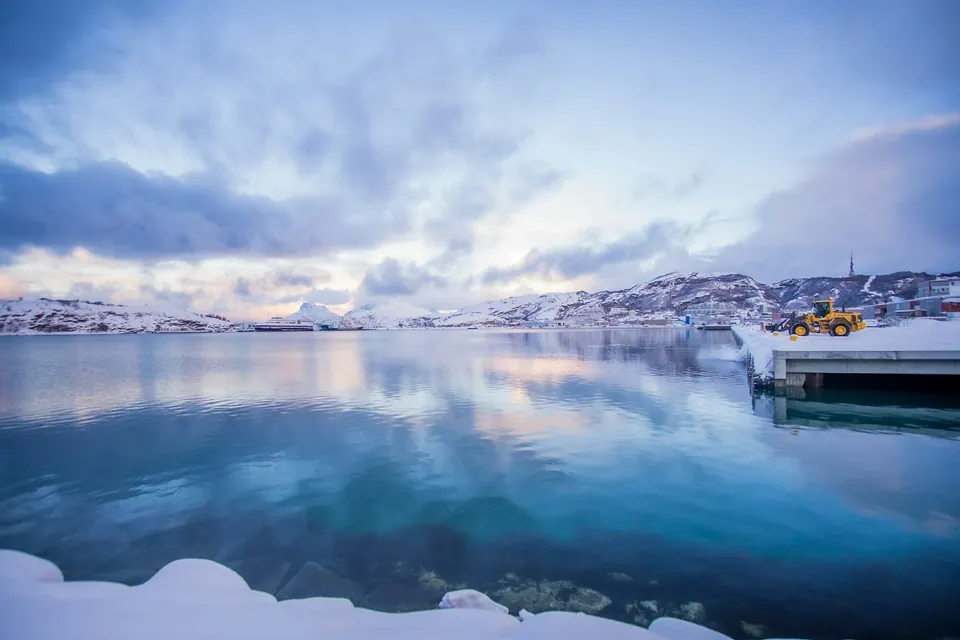
Bodø sits just north of the Arctic Circle on Norway’s Nordland coast, where the mountains meet the sea. It’s a compact, modern city that was largely rebuilt after being destroyed in the Second World War, and in 2024 it served as a European Capital of Culture. For aurora viewing, its coastal position means milder temperatures than inland locations, though the maritime climate also brings more cloud. On clear nights, the Northern Lights are regularly visible from the city and surrounding area.
The city is best known as the gateway to Lofoten, with ferries departing daily for the archipelago. But Bodø has its own draw. Saltstraumen, around 30 km south-east of the city, is one of the world’s strongest tidal currents and makes for a dramatic excursion. The Norwegian Aviation Museum (Norsk Luftfartmuseum) is one of the country’s largest, and the Nordland Museum (Nordlandsmuseet) covers the region’s cultural history from the Stone Age to the present.
For aurora viewing away from city lights, the coastline either side of Bodø offers good options. Knyken, Mjelle beach and the Bodø peninsula’s northern tip are popular spots with open views across the sea to the north. Sea eagles are abundant in the area, and boat trips to spot them run year-round.
Bodø has a compact airport with direct flights from Oslo, Bergen, Trondheim and Tromsø, making it easy to reach. The Hurtigruten coastal steamer also calls here. From Bodø you can continue north by road to Lofoten or Tromsø, or take the scenic Nordland railway south to Trondheim.
-
Credit: Metin Celep
-
Credit: Guillaume Briard
-
Credit: op23
-
Credit: Anne M
-
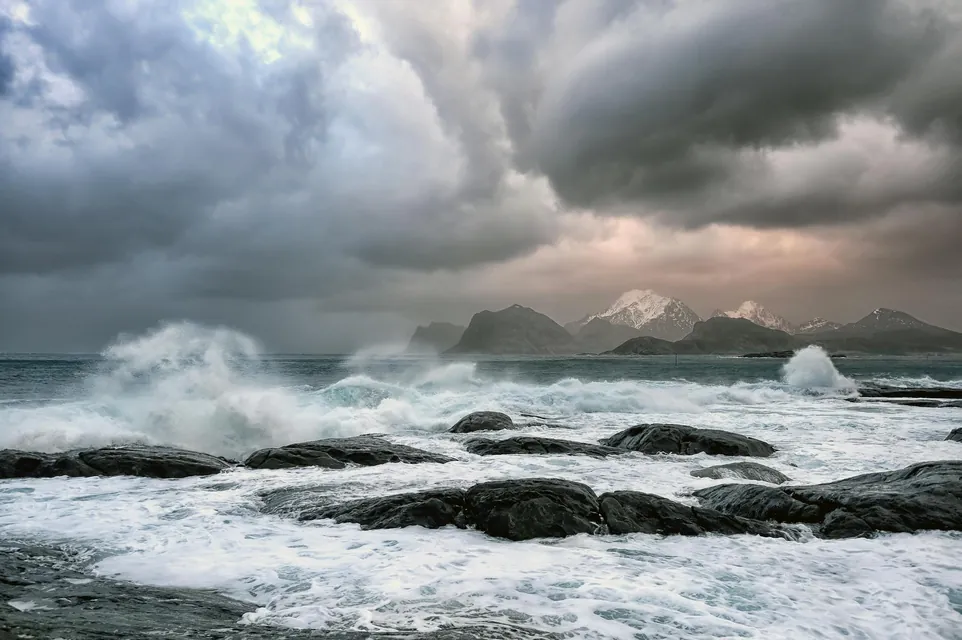
Credit: stein egil liland
-
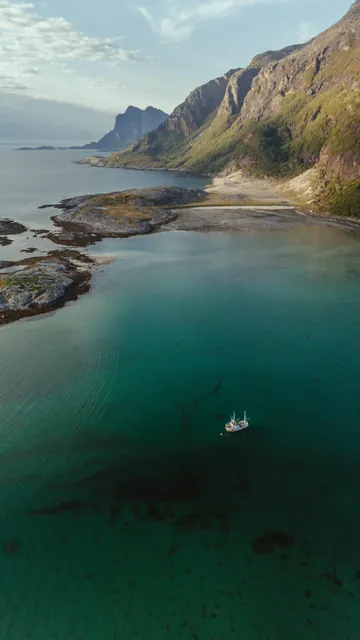
Credit: Alexander Jensen
-
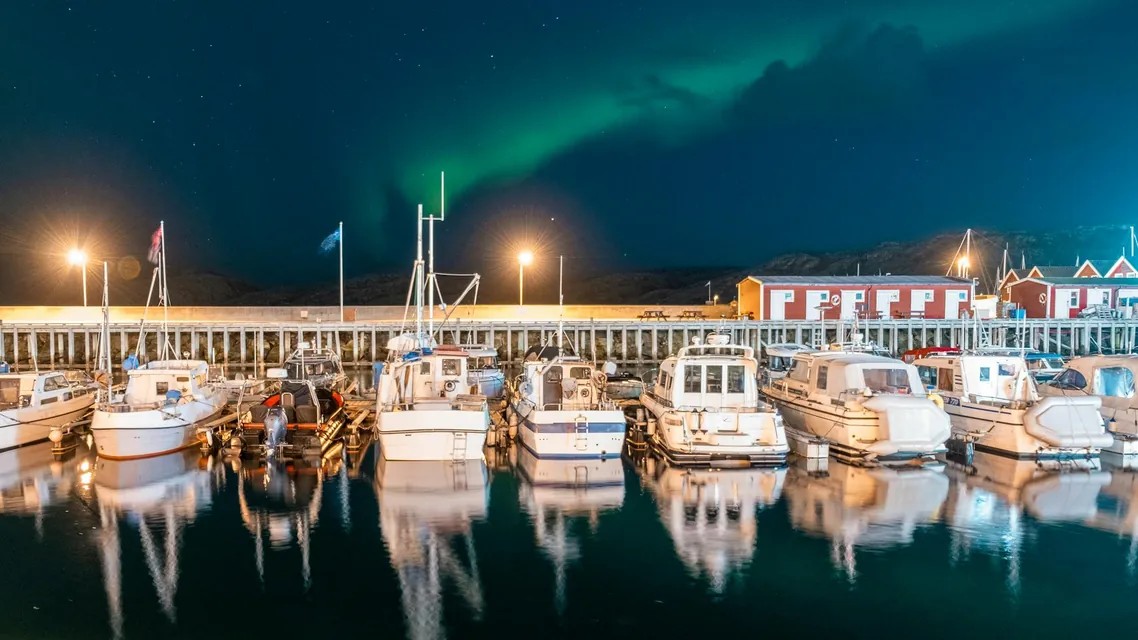
Credit: op23
-
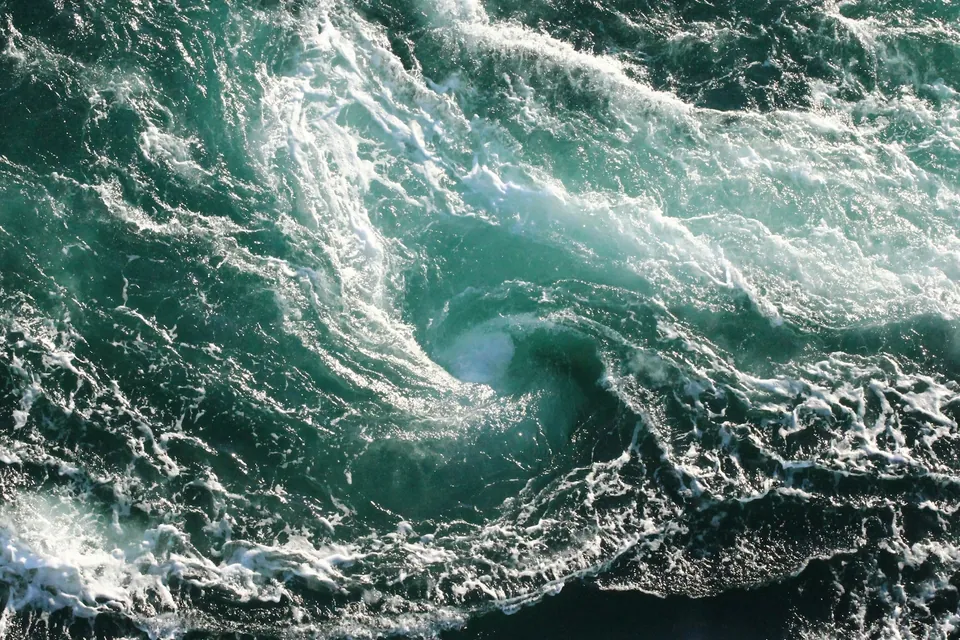
Credit: Arvid Høidahl
How are my chances of seeing the aurora today?
Many factors contribute to your likelihood of viewing the aurora in Bodø. Geomagnetic activity, cloud cover and the amount of ambient light all play a big part. Check the forecasts for how good the viewing conditions are today.
Aurora Probability and Atmospheric Conditions
4%
There is a 4% chance of seeing the aurora overhead in the Bodø area (forecast for 9 October 2026 at 7:11am UTC)
Kp 3.33
The Kp-index is a scale used to measure geomagnetic activity. It ranges from 0 to 9, with higher values indicating greater geomagnetic activity.
- 0-2 (Very low) Far north, quite dim, and not very active.
- 3-5 (Moderate) Can be seen further south, with increased brightness and activity. Chance of good viewing conditions nearer the pole.
- 6-7 (High) Visible in many northern regions, with vibrant displays.
- 8-9 (Extreme) Widespread visibility, often seen in areas much further south than usual, with intense and colorful displays.
HPI 35 GW
The Hemispheric Power Index (HPI) is a vital measure used to assess the strength of auroral activity at the poles. It estimates the total auroral energy input, with values above 20 GW indicating an aurora-active state. When the HPI reaches levels of 100 GW or more, it signifies a very significant geomagnetic storm, which can lead to spectacular auroral displays.
Bz -4 nT
Bz refers to the north-south orientation of the magnetic field embedded in the solar wind. It is measured in nanoteslas (nT).
When Bz is negative (southward), it allows solar wind particles to penetrate the Earth’s magnetic field more easily. A strong negative Bz is often associated with increased chances of seeing the Northern Lights.
Conversely, when Bz is positive (northward), the Earth’s magnetic field tends to block the solar wind, resulting in reduced aurora activity.
Bt 6 nT
Bt measures the overall power of the Interplanetary Magnetic Field (IMF) from the Sun; higher numbers (e.g., above 20 nT) mean more energy available for aurora.
Density 7.36 p/cm3
Solar wind density refers to the number of charged particles in a given volume of the solar wind, typically measured in particles per cubic centimetre (p/cm3).
A typical solar wind density is around 2.76 p/cm3.
The density of the solar wind affects how many particles reach the Earth’s magnetosphere. A higher density means more particles are available to interact with the Earth’s magnetic field. When these charged particles collide with the gases in the Earth’s atmosphere, energy is released in the form of light that we see as the aurora.
Speed 356.0 km/s
Solar wind speed refers to the velocity at which charged particles are ejected from the Sun’s outer atmosphere, known as the corona.
A typical solar wind speed is about 375 km/s. When both speed and density are high, the energy transferred to the Earth’s magnetosphere increases, enhancing the chances of seeing vibrant auroras.
Light Levels
Moon
Waning crescent 8%
Sunrise 7:40am
Sunset 5:58pm
Moonrise 5:53am
Moonset 5:17pm
Weather Forecast for Bodø
Rain
0°C Feels like -5°C
- High
- 5°C
- Low
- 0°C
-
Chance of precipitation 93%
-
Cloud cover 27%
-
Easterly winds 5 km/h gusts of 8 km/h
-
Rain 2 mm
Aurora season in Bodø
The aurora season in Bodø runs from September to March. The best viewing conditions are in the peak months of October, February and March.
Book an amazing adventure in Bodø
Explore this selection of tours and activities to make the most of your visit to Bodø.
-

Northern Lights Tours Bodo Norway
4.9 (126)
6 - 8 hours From £181.45
Join us for a small-group Northern Lights adventure from Bodø where we go all-in to give you the best possible chance of seeing the Aurora. We follow the weather, cloud cover and Aurora forecasts throughout the evening and use our local knowledge to decide where to go. If conditions around Bodø are not favourable, we go further into the countryside, sometimes towards the Swedish border. We don’t have a fixed turnaround time. When conditions are challenging but there is still a realistic chance of seeing the Northern Lights, we stay out longer, giving the skies more time to clear. Some nights this means returning to Bodø as late as around 2 AM. Our approach has resulted in an Aurora sighting rate of around 85%. We travel in a comfortable Mercedes 4WD van with a maximum of six guests. We’ll share local knowledge about the landscape and the Aurora, take high-quality photos for you, and provide warm drinks and snacks. Warm clothing and headlamps are also available if needed.
-

Zodiac Experience Saltstraumen and Eagle Safari
5.0 (23)
2 hours From £120.81
Witness the power of nature on a thrilling RIB ride through the Saltstraumen, known as the world’s strongest maelstrom. Feel the rush as you navigate this incredible natural phenomenon, where the tides create a mesmerizing spectacle. Keep your eyes peeled for the majestic white-tailed eagle soaring above, as this unique adventure combines the thrill of speed with the beauty of wildlife. With a bit of luck, you might even catch a closer glimpse of these magnificent birds in their natural habitat.
-

Andenes Whale Safari: Arctic Whale Watching Tour in Vesterålen
3.7 (10)
3 - 5 hours From £158.11
Experience authentic whale watching from Andenes; one of Europe’s top locations where deep waters lie just offshore. Our spacious, stable vessels offer a comfortable journey with heated indoor lounges, large viewing decks, and onboard refreshments. Unlike smaller high-speed boats, you can enjoy the experience at a relaxed pace. Our expert guides provide engaging insights into whale behaviour and the Arctic ecosystem. On selected departures, we use a hydrophone to help locate whales beneath the surface. We follow responsible whale watching practices at all times. And if no whales are seen, your Whale Pass allows you to join another tour free of charge.
-

Viking wall
5.0 (26)
2 hours 30 minutes From £96.49
Steep climbing above the sea with great views. Our experienced guides will make sure you have an unique experience where mountains and ocean meet. Climbing above the sea adds to the thrill of the climb and is suitable for both seasoned climbers and guests with little or no experience from climbing.
-

Magical Saltstraumen Tour
3.5 (4)
1 - 2 hours From £153.98
Visit Saltstraumen when the current is at its strongest and admire the enormous forces of Mother Earth. The timing for this varies from day to day, and when it is a new moon or full moon, the current is extra strong. We have timetables which we use to get the best experience.
-

Downtown Bodø: A Self-Guided Walking Tour in Northern Norway
4.0 (6)
1 - 1 hour 30 minutes From £6.92
Are you looking for a unique way to explore Bodø's highlights without a tour group? Explore the downtown of Bodø at your own pace with this self-guided tour. You’ll make your way through the city’s downtown area to a jetty that will give you a clear view of the small but important Nyholmen Skandse fortress, located in the middle of the port. Along the way, you’ll see where Soviet spy Selmer Nilsen hid in the Norrona hotel to monitor aviation traffic during the Cold War. • Engage in captivating historical stories and Cold War intrigue while discovering Bodø's downtown and Nyholmen Skandse fortress • Uncover local legends and learn about prominent figures like Anna Benoni • Do it all in 60 minutes or linger at stops along the way with complete control over when you start and finish • Get unlimited use before your booking date and after it • Use the virtual tour option at home The route is wheelchair accessible, but please be aware that there will be sections of cobblestones and sand.
Places to check out around Bodø
Discover Mountains, Restaurants, Museums and more…
-

Aga Konditori
Bakery
-
Bjørk
Café
-
Braset Lookout
Scenic Lookout
-

Bryggerikaia
Seafood Restaurant
-

Craig Alibone Pâtisserie
Chocolate Store
-
Domkirken i Bodø
Church
-
Frostfjellet
Mountain
-

Gatsby Burger & Bar
Burger Joint
-
Hovdsundet
Beach
-

Hundholmen Brygghus
Brewery
-
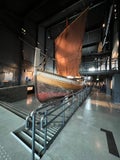
Jektefartsmuseet
Museum
-
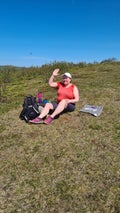
Junkerfjellet
Mountain
-

Keiservarden
Mountain
-
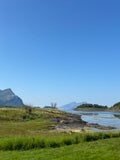
Kjerringøy
City
-
Løpsfjellet
Mountain
-

Lystpå
Restaurant
-

Melkebaren
Coffee Shop
-
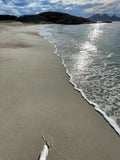
Mjelle
Beach
-
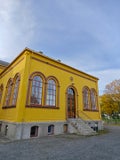
Nordlandsmuseet
History Museum
-

Norsk Luftfartmuseum
Museum
-
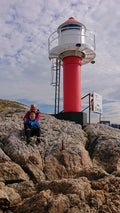
Nyholmen skandse
Historic and Protected Site
-

Ohma Asian Cooking
Asian Restaurant
-

Piccadilly
Pub
-
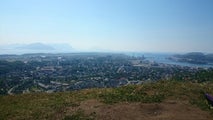
Ramnfloget
Scenic Lookout
-
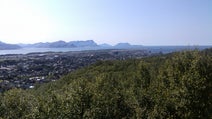
Rønvikfjellet
Mountain
-
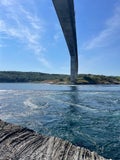
Saltstraumen
Other Great Outdoors
-
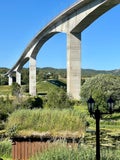
Saltstraumenbrua
Bridge
-
Sjøbaren
Seafood Restaurant
-
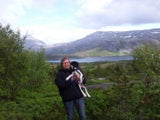
Sjunkhatten nasjonalpark
National Park
-

Stormen Konserthus
Concert Hall