Aurora Viewing Locations
Canada
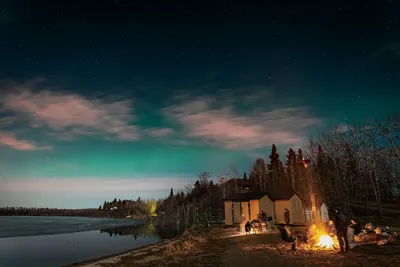
From the Arctic tundra of Yellowknife to the Rocky Mountain parks of Alberta, Canada offers some of the most reliable and dramatic aurora viewing in the world.
-
Banff, in the Canadian Rockies at 51°N, is a Dark Sky Preserve where strong geomagnetic storms produce spectacular aurora displays above glacial lakes and mountain peaks. Further south than most aurora destinations, but dramatic when conditions align.
-
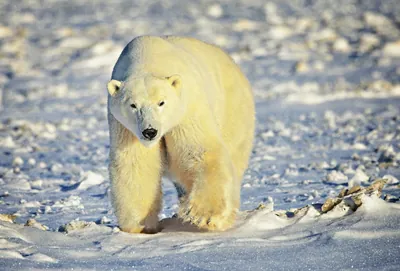
Churchill, on Hudson Bay in northern Manitoba at 59°N, is the polar bear capital of the world and a superb aurora destination. Its extreme remoteness and zero light pollution produce spectacularly dark skies beneath the auroral oval.
-
Edmonton, Alberta’s capital at 53°N, is one of North America’s most northerly major cities. Flat prairie horizons and nearby Dark Sky Preserves offer good aurora viewing, and the city serves as a gateway to Jasper and Canada’s north.
-
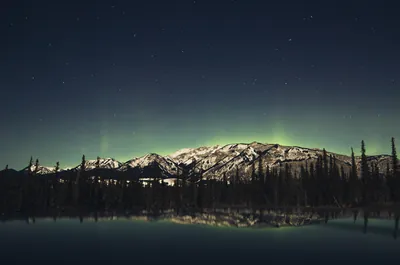
Jasper, at 53°N in the Canadian Rockies, sits within the world’s largest Dark Sky Preserve. Its remote location, dark skies and mountain lake reflections make it one of the best aurora viewing spots in the Rockies.
-
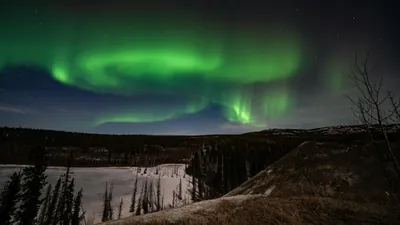
Whitehorse, capital of Canada’s Yukon Territory at 61°N, combines dry interior skies with easy access to dark viewing locations. Takhini Hot Springs, boreal forest and gold rush heritage make it a distinctive base for Northern Lights viewing in western Canada.
-
Yellowknife, capital of Canada’s Northwest Territories at 62°N, sits directly beneath the auroral oval. A dry continental climate and around 240 aurora-active nights per year make it one of the most reliable Northern Lights destinations in the world.
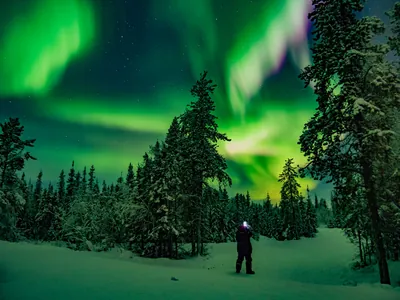
Faroe Islands
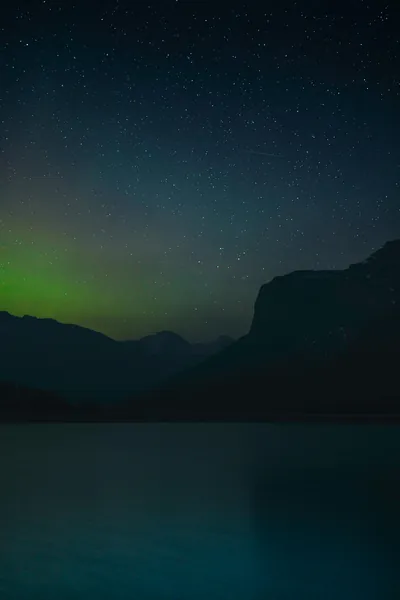
A dramatic North Atlantic archipelago at 62°N with virtually no light pollution. When the maritime skies clear, the Faroe Islands’ rugged coastline provides a striking backdrop for the Northern Lights.
-
Tórshavn, the tiny capital of the Faroe Islands at 62°N, offers Northern Lights viewing when skies clear over this dramatic North Atlantic archipelago. The islands’ lack of light pollution and striking coastal landscapes make for exceptional aurora photography.

Finland
Finnish Lapland combines dark Arctic skies with excellent tourism infrastructure, from glass igloos and fell villages to reindeer safaris and the Finnish sauna tradition.
-
Inari, in the wilderness of Finnish Lapland, sits on the shores of one of Finland’s largest lakes. Its remote location within the auroral oval, rich Sámi culture and vast open landscapes make it one of Finland’s best spots for Northern Lights viewing.
-
Levi is Finnish Lapland’s largest ski resort, offering dark skies and excellent aurora viewing alongside a full range of winter activities including skiing, snowmobile safaris and glass-roofed cabins for watching the Northern Lights in comfort.
-
Luosto is a tranquil fell village in Finnish Lapland with some of the darkest skies in Finland. Surrounded by Pyhä-Luosto National Park and old-growth forests, it offers outstanding aurora viewing in a quiet, traditional Lapland setting.
-
Rovaniemi, the capital of Finnish Lapland, sits on the Arctic Circle and is the region’s main gateway. Home to Santa Claus Village and the Arktikum museum, it combines Lapland’s cultural highlights with aurora viewing opportunities and easy access to the wilderness beyond.
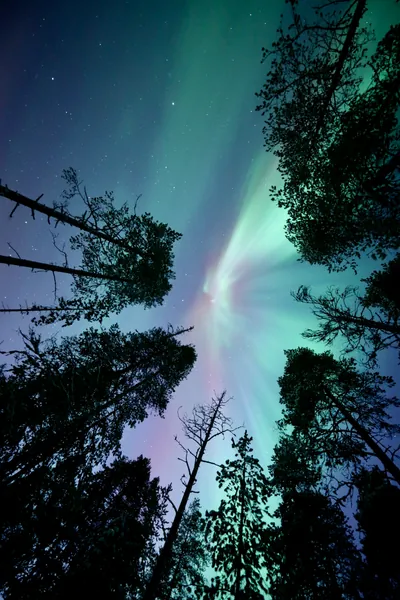
Greenland
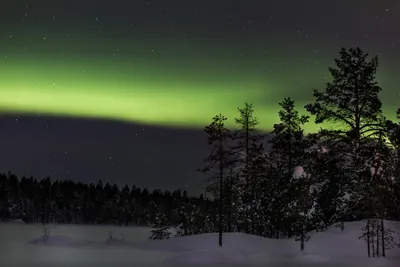
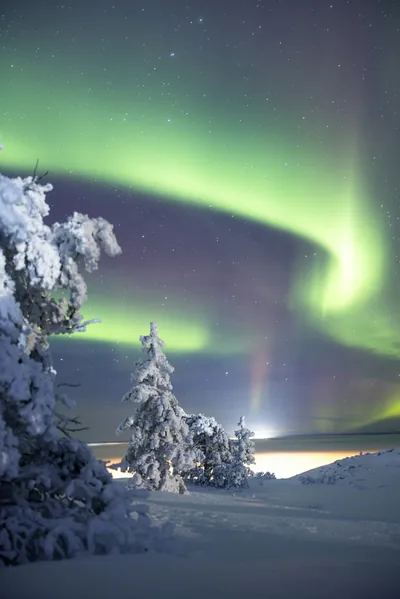
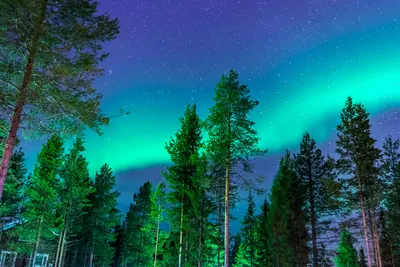
The world’s largest island with virtually zero light pollution. Greenland’s icebergs, fjords and vast Arctic wilderness create an unmatched setting for Northern Lights viewing.
-
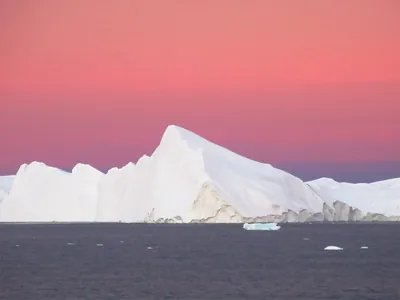
Ilulissat, on Greenland’s west coast at 69°N, overlooks a UNESCO World Heritage icefjord where enormous icebergs drift past. The Northern Lights reflected among the bergs create one of the most extraordinary aurora viewing experiences anywhere.
-
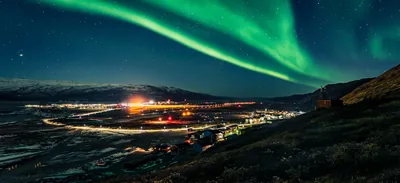
Kangerlussuaq, deep inland on Greenland’s west coast, has the clearest skies in the country thanks to its dry, stable climate. The tiny settlement near the edge of the ice sheet offers some of the best aurora viewing conditions in Greenland.
-
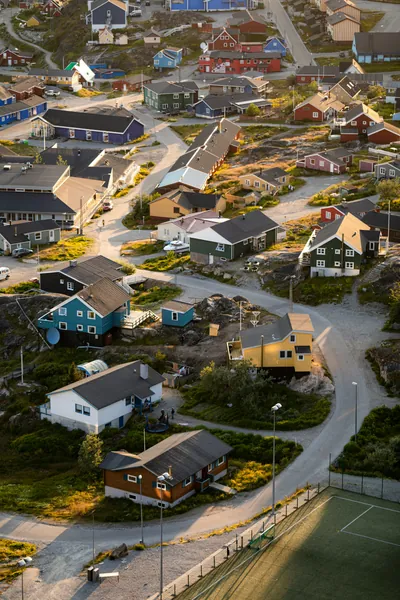
Nuuk, Greenland’s capital at 64°N, combines a growing cultural scene with immediate access to a vast, uninhabited fjord system. Dark skies are close at hand, and the town serves as Greenland’s transport hub for exploring further afield.
-
Qaqortoq is the largest town in South Greenland, set on a colourful hillside overlooking a sheltered fjord. Its remote location, near-total absence of light pollution and fascinating Norse and Inuit heritage make it a distinctive and uncrowded aurora destination.
Iceland
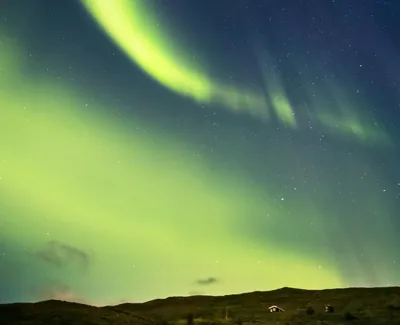
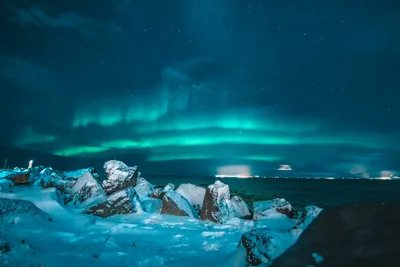
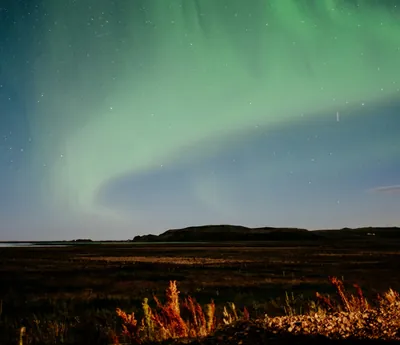
A volcanic island at 64°N where glaciers, lava fields, hot springs and waterfalls create some of the most dramatic aurora backdrops in the world.
-
Akureyri, Iceland’s main northern town, sits at the head of Eyjafjörður fjord with a sheltered, mild climate. Its position near the Arctic Circle, dark fjord surroundings and easy access to the Mývatn area make it an excellent base for Northern Lights viewing in north Iceland.
-
Reykjavík, the world’s most northerly capital, is a vibrant city with a lively cultural scene and easy access to Iceland’s dark countryside for Northern Lights viewing. The Golden Circle, Reykjanes Peninsula and surrounding lava fields are all within easy reach.
-
Vík, Iceland’s southernmost village, sits on the dramatic south coast among black sand beaches, basalt sea stacks and glacier-capped volcanoes. Its remote location and dark skies make it one of the best spots on the south coast for Northern Lights viewing.
Norway
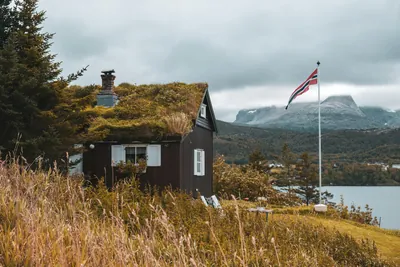
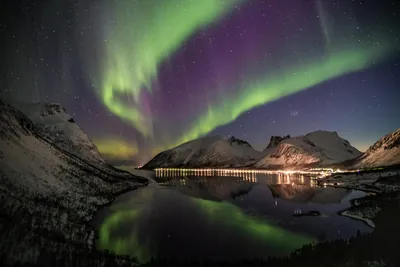
Northern Norway’s fjords, mountains and fishing villages provide some of the most iconic aurora viewing in the world, with excellent transport links and a well-established tourism infrastructure.
-
Alta, in Norway’s Finnmark county at 70°N, has a long history with the Northern Lights, the world’s first aurora observatory was built here in 1899. A dry, stable climate and vast surrounding wilderness make it an excellent base for aurora viewing.
-
Bodø, just north of the Arctic Circle on Norway’s Nordland coast, is a modern city and 2024 European Capital of Culture. Its coastal location, proximity to Lofoten and Saltstraumen, and regular Northern Lights activity make it a versatile Arctic base.
-
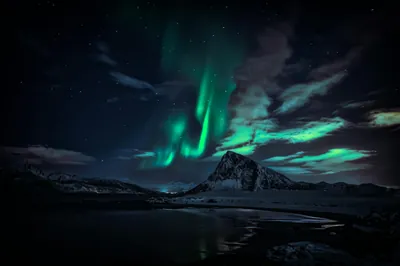
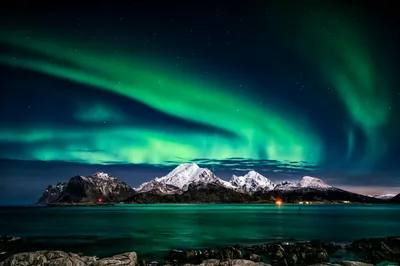
Lofoten is an archipelago of dramatic peaks and fishing villages above the Arctic Circle in Norway. Calm fjord reflections, colourful rorbuer and open beaches facing north make it one of the most photogenic aurora viewing locations in the world.
-
Tromsø, northern Norway’s largest city at nearly 70°N, is one of the world’s most popular aurora destinations. Frequent Northern Lights activity, a vibrant cultural scene and easy access to dark-sky fjords and mountains make it an ideal base for aurora viewing.
Shetland
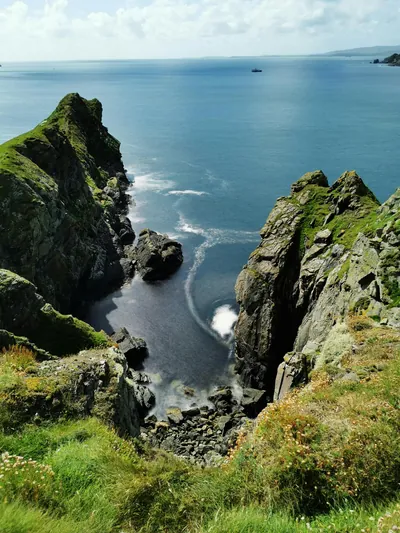
The most northerly point in the British Isles at 60°N, where minimal light pollution and wide open horizons make the “Merry Dancers” a regular sight during geomagnetically active periods.
-
Lerwick, capital of the Shetland Islands at 60°N, is the most northerly point in the British Isles. Minimal light pollution and wide open horizons make the islands a surprisingly good spot for Northern Lights viewing, with a distinct Norse-Scottish cultural heritage.
Svalbard
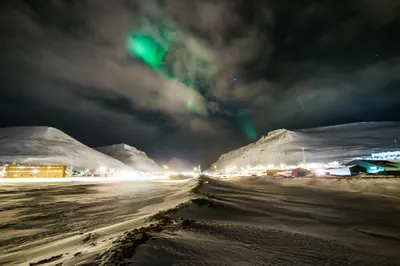
A high Arctic archipelago at 78°N where months of polar night provide round-the-clock aurora viewing opportunities in one of the most remote inhabited places on earth.
-
Longyearbyen, on Svalbard at 78°N, is the world’s northernmost settlement. Its extreme latitude and polar night offer unique aurora viewing conditions, with continuous darkness providing round-the-clock opportunities to see the Northern Lights.
Sweden
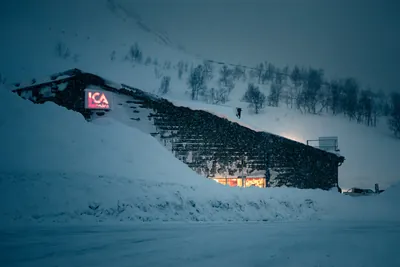
Swedish Lapland’s clear inland skies, particularly around Abisko, offer some of the most reliable aurora viewing in Scandinavia, with the Aurora Sky Station and Icehotel adding to the appeal.
-
Abisko, in Swedish Lapland, is one of the best places on earth to see the Northern Lights. A unique microclimate produces exceptionally clear skies, and the Aurora Sky Station offers panoramic views from 900 metres up.
-
Björkliden is a small mountain village in Swedish Lapland, close to Abisko and sharing the same clear-sky microclimate that makes the area one of the finest aurora viewing locations in the world.
-
Kiruna, Sweden’s northernmost city, sits above the Arctic Circle in Swedish Lapland. Its remote location, minimal light pollution and proximity to stunning Arctic wilderness make it an excellent base for Northern Lights viewing.
USA
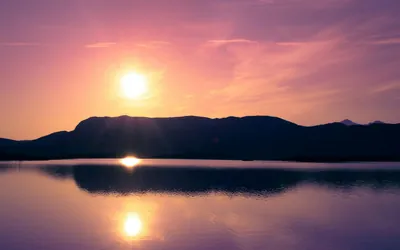
Alaska’s interior sits beneath the auroral oval, with Fairbanks offering some of the most reliable aurora viewing in the world. Vast wilderness, dry skies and a long season from August to April make it a premier destination.
-
Anchorage, Alaska’s largest city, sits between the Cook Inlet and the Chugach Mountains. While further south than Fairbanks, the surrounding wilderness offers good aurora viewing during strong displays, and the city is an excellent base for exploring wider Alaska.
-
Fairbanks, in interior Alaska at 65°N, sits directly beneath the auroral oval and is one of the best aurora viewing locations in North America. Clear inland skies and flat terrain provide excellent conditions on the majority of clear nights during the season.
-
Healy sits at the northern entrance to Denali National Park in interior Alaska. Its remote location, dark skies and open terrain along the Nenana River valley make it an excellent base for aurora viewing away from urban light pollution.