Anchorage
Anchorage is Alaska’s largest city, home to around 40% of the state’s population, and the most common entry point for visitors to the region. Situated on the Cook Inlet with the Chugach Mountains rising directly behind it, the city combines urban convenience with immediate access to genuine wilderness. For aurora viewing, Anchorage is further south than Fairbanks, meaning displays are less frequent, but strong geomagnetic storms can produce impressive shows visible from within and around the city.
The best aurora viewing near Anchorage requires getting away from city lights. Popular spots include the Glenn Highway corridor, Hatcher Pass, Knik River and the Turnagain Arm stretch of the Seward Highway. Several local operators run guided aurora tours to these locations during the winter months.
By day, Anchorage has plenty to fill the time. The Alaska Native Heritage Center is an excellent introduction to the state’s indigenous cultures. The Anchorage Museum covers art, history and science with a strong focus on the Arctic. The Tony Knowles Coastal Trail runs 18 km along the waterfront and is popular for cycling in summer and fat biking or skiing in winter. Wildlife viewing is surprisingly accessible, with moose regularly wandering through residential areas and the chance to spot beluga whales in Turnagain Arm.
Anchorage also serves as a base for exploring the wider region. The Kenai Peninsula, Denali National Park and the Mat-Su Valley are all within a day’s drive. For dedicated aurora chasers, the drive north to Fairbanks (around 5.5 hours) is worth considering for higher latitude viewing.
-

Credit: Sara Loeffler
-

Credit: Vasilis Karkalas
-

Credit: Pixabay
-

Credit: Tomáš Malík
-

Credit: Angelica Reyn
-

Credit: Howard Herdi
-
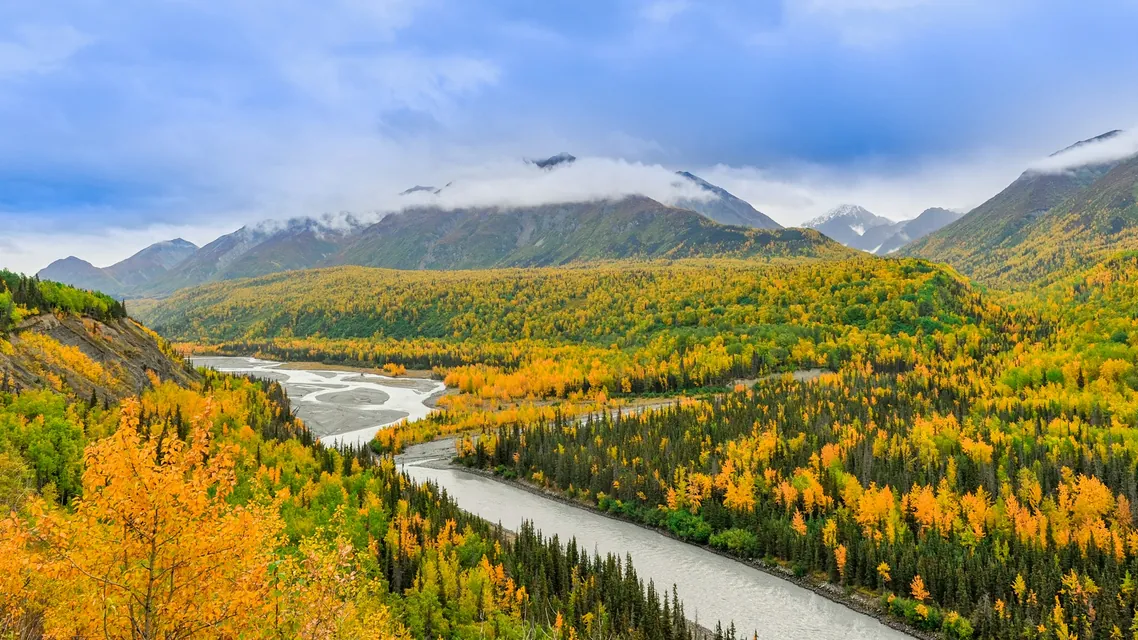
Credit: Zetong Li
How are my chances of seeing the aurora today?
Many factors contribute to your likelihood of viewing the aurora in Anchorage. Geomagnetic activity, cloud cover and the amount of ambient light all play a big part. Check the forecasts for how good the viewing conditions are today.
Aurora Probability and Atmospheric Conditions
9%
23 November 2026 11:27am UTC. Assuming clear, dark skies NOAA’s short-term forecast gives a 9% chance of the aurora appearing overhead in the Anchorage area.
Combining tonight’s Kp forecast of 1.67 with darkness, moonlight and cloud cover, we estimate the chances of seeing the aurora tonight near Anchorage are poor (4/100).
Kp 0.00
The Kp-index is a scale used to measure geomagnetic activity. It ranges from 0 to 9, with higher values indicating greater geomagnetic activity.
- 0-2 (Very low) Far north, quite dim, and not very active.
- 3-5 (Moderate) Can be seen further south, with increased brightness and activity. Chance of good viewing conditions nearer the pole.
- 6-7 (High) Visible in many northern regions, with vibrant displays.
- 8-9 (Extreme) Widespread visibility, often seen in areas much further south than usual, with intense and colorful displays.
HPI 20 GW
The Hemispheric Power Index (HPI) is a vital measure used to assess the strength of auroral activity at the poles. It estimates the total auroral energy input, with values above 20 GW indicating an aurora-active state. When the HPI reaches levels of 100 GW or more, it signifies a very significant geomagnetic storm, which can lead to spectacular auroral displays.
Bz -2 nT
Bz refers to the north-south orientation of the magnetic field embedded in the solar wind. It is measured in nanoteslas (nT).
When Bz is negative (southward), it allows solar wind particles to penetrate the Earth’s magnetic field more easily. A strong negative Bz is often associated with increased chances of seeing the Northern Lights.
Conversely, when Bz is positive (northward), the Earth’s magnetic field tends to block the solar wind, resulting in reduced aurora activity.
Bt 4 nT
Bt measures the overall power of the Interplanetary Magnetic Field (IMF) from the Sun; higher numbers (e.g., above 20 nT) mean more energy available for aurora.
Density 1.35 p/cm3
Solar wind density refers to the number of charged particles in a given volume of the solar wind, typically measured in particles per cubic centimetre (p/cm3).
A typical solar wind density is around 2.76 p/cm3.
The density of the solar wind affects how many particles reach the Earth’s magnetosphere. A higher density means more particles are available to interact with the Earth’s magnetic field. When these charged particles collide with the gases in the Earth’s atmosphere, energy is released in the form of light that we see as the aurora.
Speed 324.4 km/s
Solar wind speed refers to the velocity at which charged particles are ejected from the Sun’s outer atmosphere, known as the corona.
A typical solar wind speed is about 375 km/s. When both speed and density are high, the energy transferred to the Earth’s magnetosphere increases, enhancing the chances of seeing vibrant auroras.
Light Levels
Moon
Waxing gibbous 94%
Sunrise 9:26am
Sunset 4:05pm
Moonrise 2:39pm
Moonset 9:02am
Weather Forecast for Anchorage
Clouds
-7°C Feels like -12°C
- High
- -4°C
- Low
- -7°C
-
Chance of precipitation 0%
-
Cloud cover 85%
-
North-Easterly winds 2 km/h gusts of 4 km/h
Aurora season in Anchorage
The aurora season in Anchorage runs from September to April. The best viewing conditions are in the peak months of October, February and March.
Book an amazing adventure in Anchorage
Explore this selection of tours and activities to make the most of your visit to Anchorage.
-

Full-Day Matanuska Glacier Hike And Tour
4.8 (225)
8 hours 30 minutes From £287.02
Experience the natural wonder of Alaska's Matanuska Glacier with our full-day guided tour. Beginning with a convenient pickup from downtown Anchorage, you'll embark on a scenic two-hour journey, driving through landscapes of towering mountains. Along the way, we'll stop at local eateries, offering you the chance to purchase lunch. Upon reaching the glacier, a seasoned guide will equip you with crampons, making glacier navigation safe and manageable. Then, an all-terrain vehicle will transport you to the glacier's base. Here, you'll set off on foot to explore the glacier's icy expanse, discovering fascinating ice formations and gaining insight into the glacier's natural history from your knowledgeable guide. After this unforgettable experience, we'll journey back to Anchorage, ensuring a comfortable drop-off in downtown. This tour is a perfect blend of adventure, education, and scenic beauty, offering an in-depth encounter with one of Alaska's most impressive glaciers.
-

Glacier View & Wildlife Anchorage Adventure Tour
4.9 (455)
7 hours From £145.46
The Experience Award wining Tour in Anchorage on Viator (2025) Discover Anchorages's top-rated day trip! This award-winning tour combines Anchorage highlights, dramatic Turnagain Arm views, and guaranteed wildlife encounters at the Alaska Wildlife Conservation Center. See hanging glaciers, stroll scenic trails, and enjoy local insight from expert guides — all in one unforgettable small-group adventure.
-

PRISTINE - Wilderness, Wildlife, Glacier Experience in Anchorage
4.9 (3377)
6 hours From £171.12
Experience the Big Outdoors, Wildlife, and Glaciers Beyond Anchorage! Designed to meet strict cruise-line safety and reliability standards, this small-group Alaskan wilderness excursion goes far beyond standard point-to-point transport or rigid sightseeing schedules. Instead of following a fixed script, your guide adapts to the day's weather, tides, and wildlife activity—navigating toward the clearest views and best photo opportunities along the Turnagain Arm and Chugach Mountains. Why Travelers Choose This Experience: Expert Naturalist & History Commentary: Led by a dedicated, professionally trained Alaskan guide, you’ll hear rich local history, geology, and wildlife insights throughout the journey—plus receive complimentary photography coaching and group portraits at scenic stops. Alaska Wildlife Conservation Center Included: Enjoy included admission to observe rescued bears, moose, wood bison, muskoxen, and other native Alaskan wildlife up close in spacious habitats.
-

Grand Knik Helicopter Tour - 2 hours 3 landings - ANCHORAGE AREA
4.9 (433)
2 hours From £592.64
Our signature flightseeing and glacier landing tour, includes 30 mins of flightseeing and 30 mins landed at 3 Glacier areas including on the glacier itself. This tour includes an alpine landing where you will have 30 mins to see the grand size of the 5 mile wide and 29 mile long Knik Glacier with a birds eye view. Your 2nd landing takes you to a 100 foot ice wall where you may even be able to see the massive ice calve . After 30 minutes exploring you go to the glacier landing right in the middle of Knik Glacier, where you can get out of the helicopter and spend about 30 minutes exploring ancient ice. See the azure blue melt pools (summer), crevasses and ice formations created by water, wind and the sun. During your flight seeing, keep your eyes open for the area wildlife to include Moose, Mountain Goats, Dall Sheep, Bears and even wolf on occasion! WINTER OCT-APR LANDING IS NOT ON GLACIER AS POOLS ARE FROZEN- LANDING IS NEXT TO GLACIER Total tour time - 2 hours, includes 3 landings
-

UNTAMED - Northern Lights Sightseeing from Anchorage Alaska-4 hrs
4.2 (36)
4 hours From £136.12
Experience the Alaskan Wilderness After Dark on an Authentic Northern Lights Chase! Designed to meet strict safety and reliability standards, this small-group evening expedition goes far beyond basic point-to-point transport or stationary viewing. Led by a dedicated, professionally trained Alaskan guide, you’ll head out into the dark wilderness away from Anchorage’s city lights—enjoying engaging celestial lore, naturalist commentary, and complimentary night-sky photography coaching. Why Travelers Choose This Aurora Quest: Data-Driven: Rather than relying on a single fixed stop, we use real-time Kp indexing, solar wind data, and localized weather tracking to pinpoint the clearest skies and highest-probability vantage points each night. Departure times are adjusted nightly based on real-time solar and cloud forecasts. Every reservation includes multi-evening coverage. The aurora is a natural phenomenon governed by solar activity and Alaskan weather, sightings cannot be guaranteed.
-

Alaska Wildlife Conservation Center & Turnagain Arm Tour
4.9 (119)
4 hours 30 minutes From £115.90
Experience Alaska’s wild side on this unforgettable winter journey along the scenic Turnagain Arm, where towering mountains, frozen waterfalls, and snow-covered shores create a breathtaking backdrop. A highlight of the tour is a visit to the 140-acre Alaska Wildlife Conservation Center, a place so impressive it leaves even longtime Alaskans in awe. The center provides refuge for orphaned, injured, and ill animals that can no longer survive in the wild, while also inspiring guests through education and conservation. Walk along spacious habitats and observe iconic Alaskan wildlife—such as moose, bison, musk oxen, and bears—living in natural surroundings. Winter’s crisp air and soft light create exceptional viewing and photography opportunities, making this tour perfect for nature lovers and photographers eager to capture Alaska at its most dramatic. Along the way, your guide shares local stories, wildlife facts, and hidden viewpoints that bring Alaska’s winter landscape to life.
Places to check out around Anchorage
Discover Restaurants, Parks, Hiking Trails and more…
-

49th State Brewing
Brewery
-

Alaska Aviation Museum
Airport
-

Alaska Center for the Performing Arts
Performing Arts Venue
-
Alaska Museum of Science & Nature
Science Museum
-
Alaska Native Heritage Center
Cultural Center
-
Alyeska Summit
Mountain
-
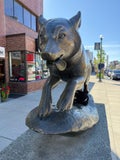
Anchorage Downtown Market & Festival
Farmers Market
-

Anchorage Museum
Art Museum
-

Arctic Roadrunner
Burger Joint
-

Bear Tooth Grill
Lounge
-

Bear Tooth Theatrepub
Movie Theater
-
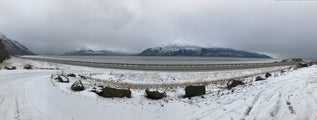
Beluga Point
Scenic Lookout
-
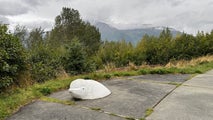
Bird Point
Scenic Lookout
-
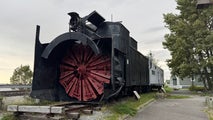
Chugach State Park
Park
-

Crow's Nest
Seafood Restaurant
-
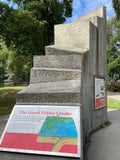
Earthquake Park
Park
-
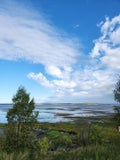
Elderberry Park
Park
-

Fire Island Rustic Bakeshop
Bakery
-
Flattop Park Trail
Hiking Trail
-

Glacier Brewhouse
Brewery
-

House of Bread Anchorage
Bakery
-

-

Moose's Tooth Pub & Pizzeria
Pizzeria
-
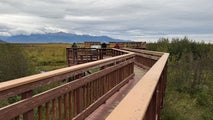
Potter Marsh
Nature Preserve
-
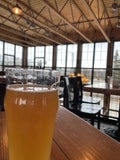
Rustic Goat
New American Restaurant
-

Samurai Sushi
Sushi Restaurant
-
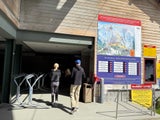
Seven Glaciers Restaraunt
Seafood Restaurant
-

Simon & Seafort's Saloon & Grill
Seafood Restaurant
-

Snow City Cafe
Breakfast Spot
-
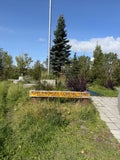
Tony Knowles Coastal Trail
Hiking Trail
Explore more nearby Anchorage
Get off the beaten track, these nearby destinations also offer opportunities to see the Northern Lights and are within easy reach of Anchorage.
-
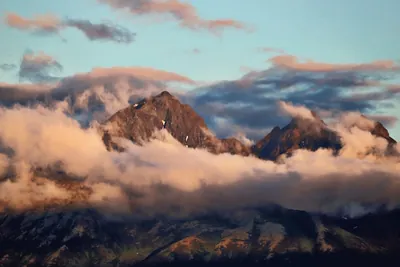
Credit: Cindy Dalton
Eagle River
61°20'45"N, 149°34'2"W
Aurora probability in Eagle River: 9%
Just 20 miles north of Anchorage, Eagle River is nestled in the Chugach Mountains. This lovely town is known for its outdoor activities, including hiking, fishing and skiing in the winter. The scenic views and proximity to nature make it a perfect getaway for those looking to explore the Alaskan wilderness.
-
Credit: Alexandra Tran
Girdwood
60°57'27"N, 149°5'53"W
Aurora probability in Girdwood: 9%
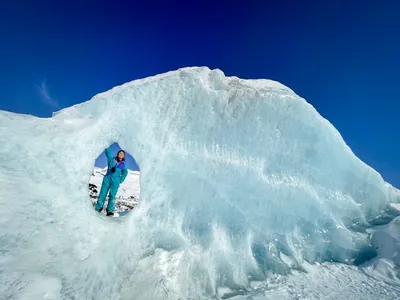
Located about 40 miles south of Anchorage, Girdwood is a charming mountain town known for its ski resorts and stunning natural beauty. Visitors can enjoy skiing and snowboarding in the winter, as well as hiking and wildlife viewing in the summer. The town also offers hot springs and a variety of dining options, making it a popular destination for outdoor enthusiasts.
-
Credit: Lori Stevens
Whittier
60°45'34"N, 148°41'22"W
Aurora probability in Whittier: 9%
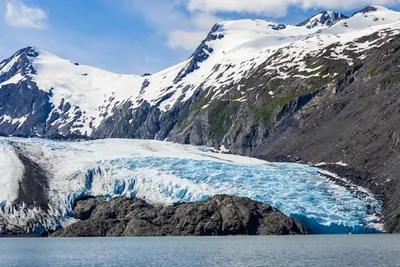
Whittier is a small town located about 60 miles southeast of Anchorage, accessible via the scenic Anton Anderson Memorial Tunnel. Known as the gateway to Prince William Sound, Whittier offers stunning fjords, glaciers and abundant wildlife.