Choosing where to go to see the Northern Lights is one of the biggest decisions you’ll make when planning your trip. Every aurora destination has its own character, its own advantages and its own drawbacks. The best choice depends on what matters most to you: raw aurora probability, ease of travel, budget, daytime activities or the overall experience.
This guide compares the main aurora-viewing countries side by side, covering what each does well, where each falls short and what kind of traveller each suits best. All of the destinations listed sit within or close to the aurora oval and offer genuine chances of seeing the lights during the September to March season.
Norway
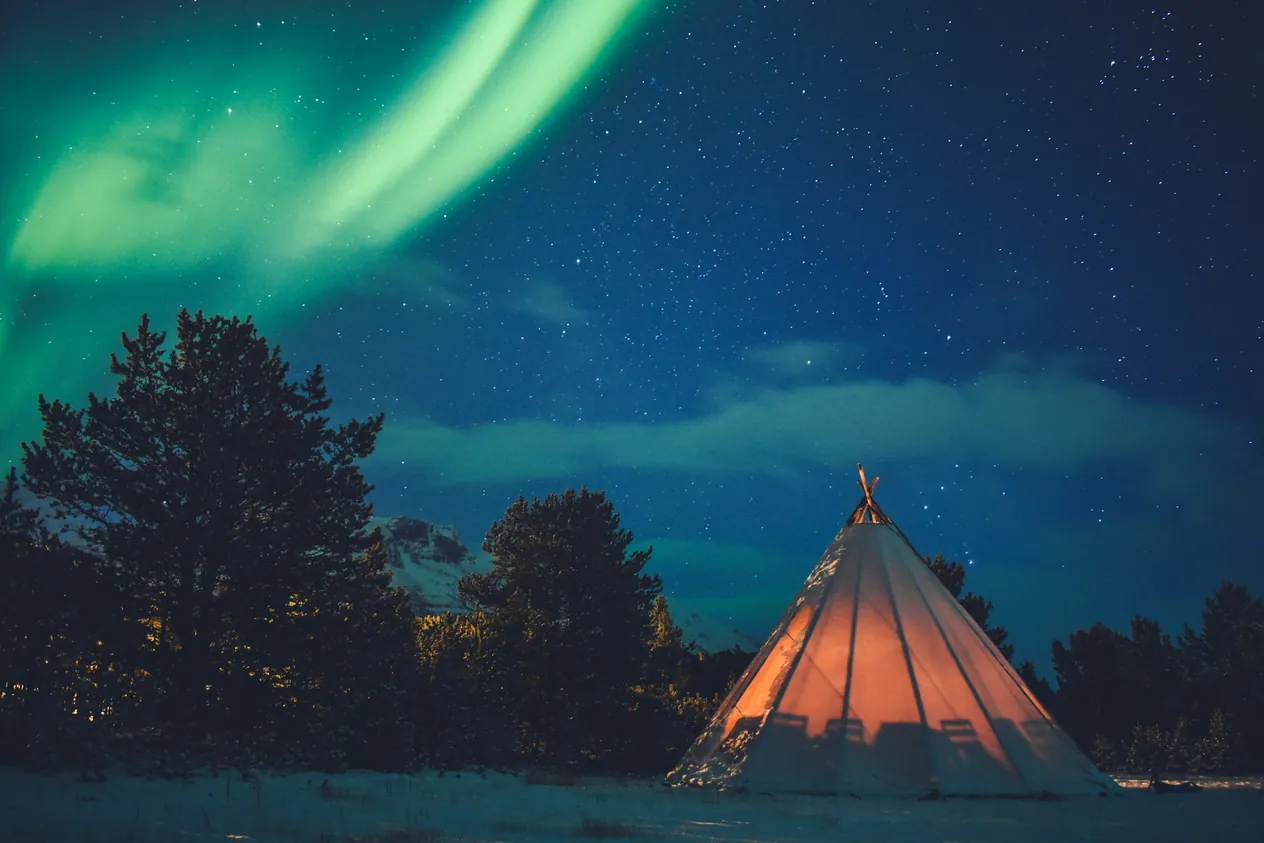
Norway is the most popular aurora destination in Europe, and for good reason. The northern coastline sits directly beneath the aurora oval, and the well-developed tourism infrastructure makes it accessible even for first-time visitors to the Arctic.
Credit: Bit Cloud
Best locations
Tromsø is the hub of Norwegian aurora tourism, with frequent direct flights from European cities, a lively town centre and dozens of tour operators. Alta offers darker skies and a drier climate, while the Lofoten Islands provide some of the most photogenic foregrounds anywhere in the aurora zone. Bodø, slightly further south, is a good-value alternative with its own dramatic coastal scenery.
Strengths
- Directly under the aurora oval at 69-70°N
- Excellent tourism infrastructure with English widely spoken
- Spectacular fjord and mountain landscapes for photography
- Whale watching season (October to January) overlaps with aurora season
- Strong cultural scene, good restaurants and comfortable accommodation
- Dog sledding, snowmobiling and reindeer sledding widely available
Weaknesses
- Coastal weather means frequent cloud cover, particularly in Tromsø
- Expensive. Norway is one of the priciest countries in Europe for food, accommodation and tours
- Popular destinations can feel crowded during peak season (January to March)
Best for
Travellers who want a well-rounded trip combining aurora with cultural experiences, wildlife and dramatic scenery. Also a strong choice for first-time aurora visitors who want the safety net of organised tours and reliable infrastructure.
Iceland
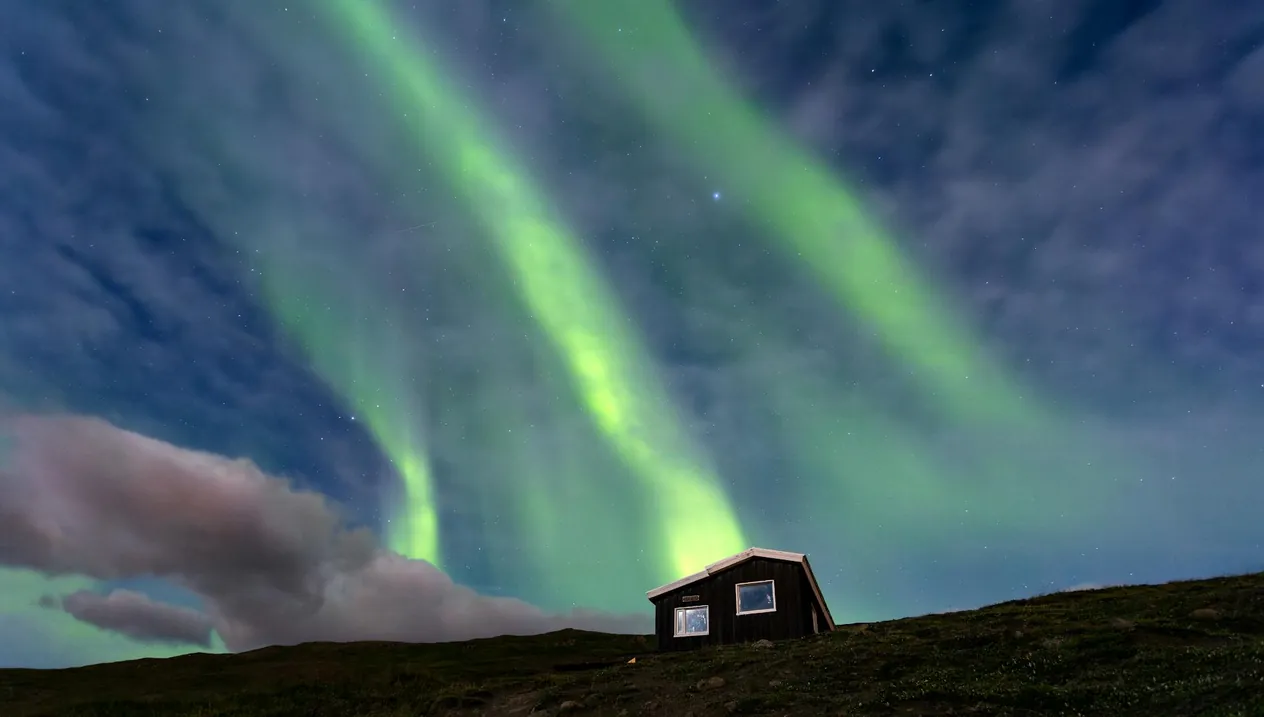
Iceland offers something unique among aurora destinations: a volcanic, geothermally active landscape unlike anywhere else on Earth. The aurora is almost secondary to the sheer strangeness and beauty of the country itself.
Credit: Marek Piwnicki
Best locations
Reykjavík is the gateway, but light pollution means you’ll want to head out of town for serious viewing. The south coast, Snæfellsnes peninsula and the area around Akureyri in the north all offer darker skies. Vík on the south coast combines black sand beaches with aurora potential.
Strengths
- Unique volcanic landscapes provide extraordinary photography foregrounds
- Geothermal bathing (Blue Lagoon, Sky Lagoon, Mývatn Nature Baths) is the perfect complement to cold nights outside
- The Golden Circle, ice caves and glacier walks offer world-class daytime activities
- Compact country, easy to drive between regions to escape cloud
- Direct flights from Europe and North America
- Mild coastal climate by Arctic standards (rarely below -10°C)
Weaknesses
- At 64°N, Reykjavík sits at the southern edge of the aurora oval. You need Kp 3+ for reliable displays overhead
- Atlantic weather brings frequent cloud and rain, particularly on the south coast
- Very expensive, comparable to Norway
- Can feel over-touristed at popular sites during peak season
- Limited true darkness in September and March due to latitude
Best for
Travellers who want the aurora as part of a broader adventure holiday. Iceland rewards those who are flexible with their plans, willing to drive and happy to treat the lights as one element of a trip rather than the sole focus. If the aurora doesn’t appear, you won’t be short of things to do.
Finland
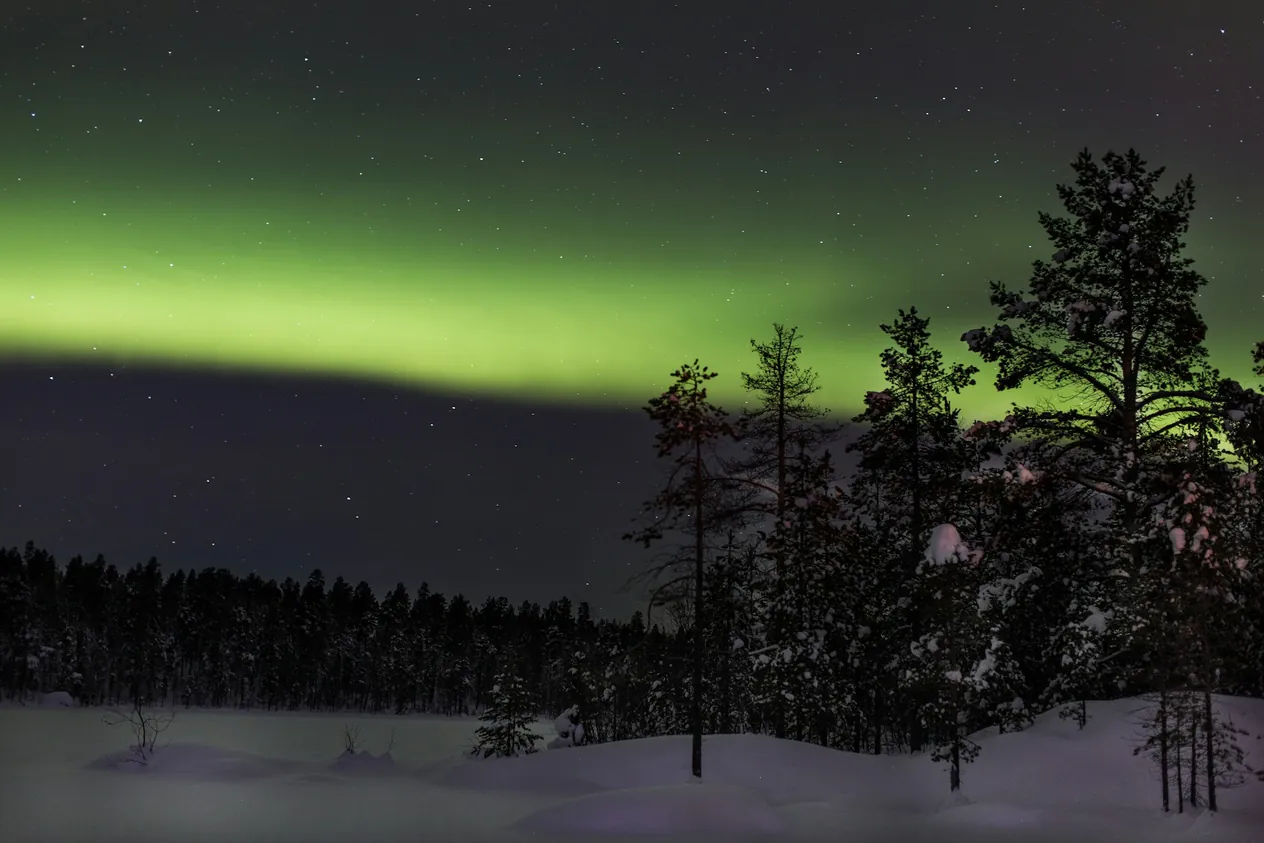
Finnish Lapland is one of the most reliable places to see the Northern Lights, thanks to its continental climate that delivers cold, clear skies more consistently than the Atlantic-facing coasts of Norway and Iceland.
Credit: Ozgu Ozden
Best locations
Inari and Luosto offer dark skies and low light pollution. Rovaniemi is the most accessible gateway to Finnish Lapland, while Levi combines aurora viewing with a well-developed ski resort.
Strengths
- Continental climate brings clearer, drier skies than coastal destinations
- Glass igloos and aurora cabins let you watch from a warm bed
- World-class husky and reindeer safaris
- Finnish sauna culture provides a perfect counterpoint to cold nights outside
- Generally more affordable than Norway or Iceland
- Excellent for families (Santa Claus Village, Ranua Wildlife Park)
- Flat terrain means unobstructed views of the sky in all directions
Weaknesses
- Flatter landscapes lack the dramatic fjords and mountains of Norway
- Extremely cold in midwinter, regularly -25°C to -35°C inland
- Less varied daytime activities compared to Iceland
- More remote, with fewer direct international flights (usually via Helsinki)
Best for
Travellers who prioritise maximising their aurora chances above all else. Finland’s clear skies and purpose-built aurora accommodation (glass igloos, aurora cabins with ceiling windows) make it the most comfortable place to wait for the lights. Also an excellent choice for families and for anyone who wants the quintessential winter wonderland experience.
Sweden
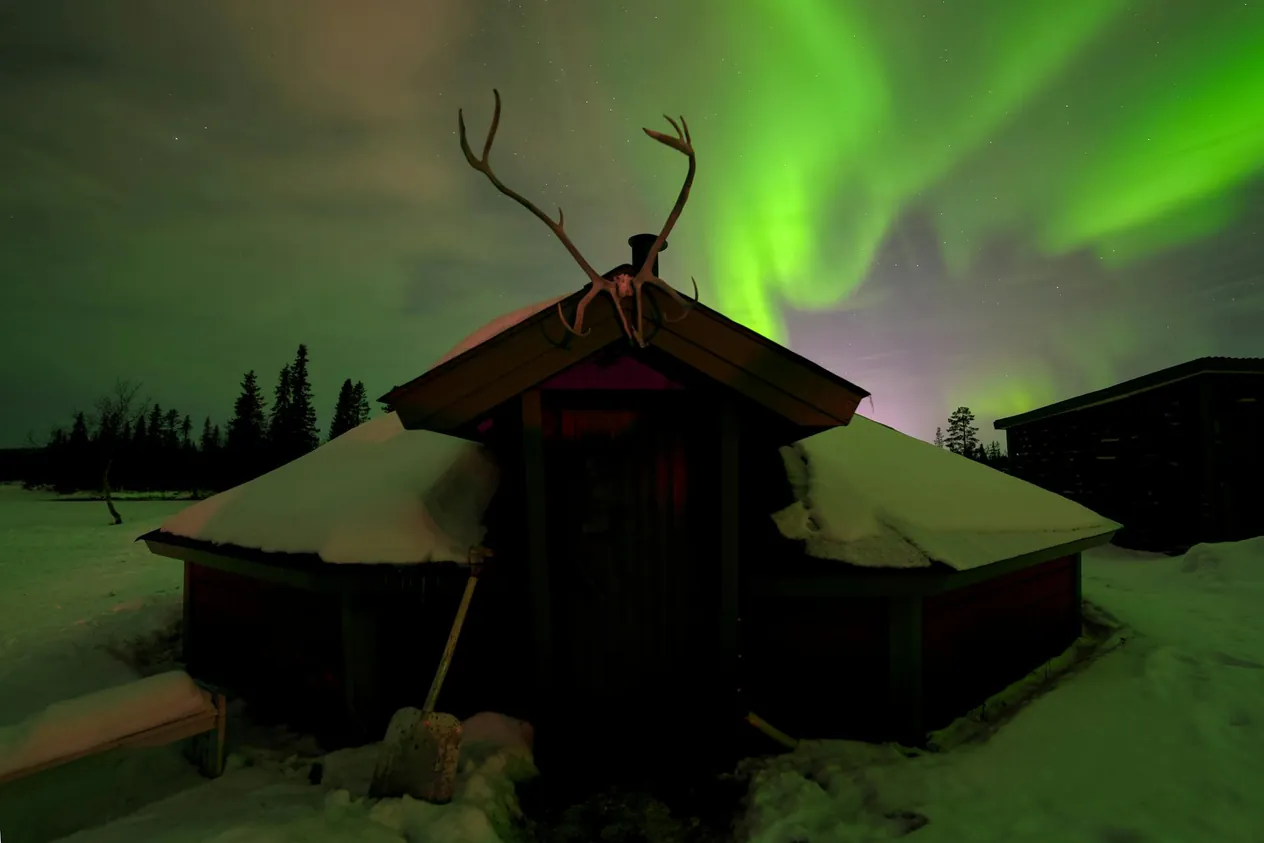
Swedish Lapland is less visited than its Norwegian and Finnish neighbours, which is part of its appeal. It offers some of the best aurora-viewing conditions in Scandinavia, particularly around the famous microclimate of Abisko.
Credit: Susanne Jutzeler, suju-foto
Best locations
Abisko is widely considered one of the best places on Earth to see the Northern Lights, thanks to a rain shadow effect from the surrounding mountains that keeps skies clear when the rest of the region is overcast. Nearby Björkliden shares the same favourable conditions. Kiruna, Sweden’s northernmost town, is the main transport hub.
Strengths
- Abisko’s microclimate offers statistically the clearest skies in the aurora zone
- The Aurora Sky Station in Abisko National Park provides guided viewing from an elevated vantage point
- The ICEHOTEL near Kiruna is a unique accommodation experience
- Less crowded than Norway, more affordable than Iceland
- Excellent cross-country skiing and snowshoeing
- Access to Sámi cultural experiences
Weaknesses
- Fewer direct international flights. Most visitors fly via Stockholm to Kiruna
- Abisko is a small village with limited accommodation, especially during peak season
- Less varied daytime activities than Norway or Iceland
- Very cold, similar to Finland
Best for
Serious aurora chasers who want the highest statistical chance of clear skies. Abisko’s reputation is well earned, and if maximising your viewing probability is the priority, it’s hard to beat. Also a good choice for travellers who prefer a quieter, less commercialised experience.
Canada
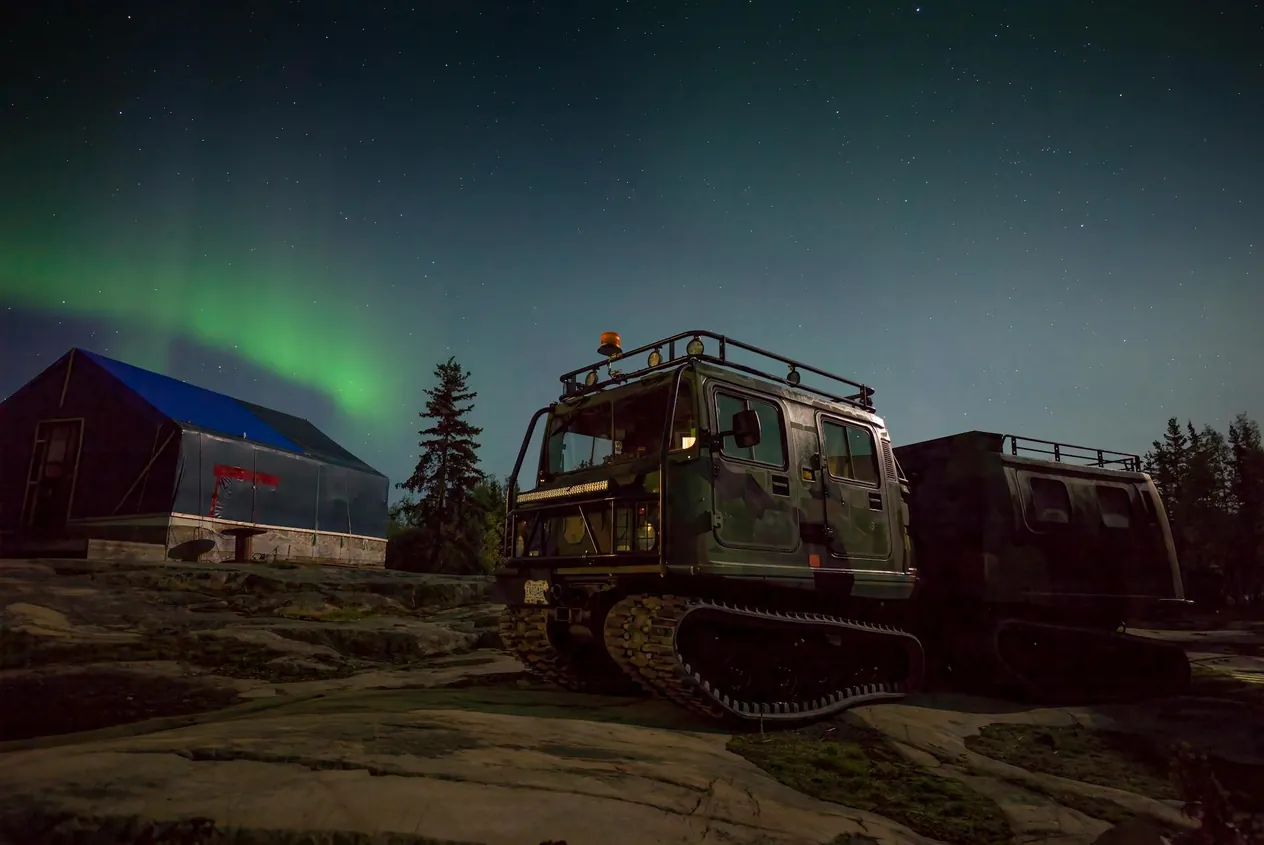
Canada offers vast, dark skies and a significant geomagnetic advantage. Because the Earth’s magnetic pole is shifted towards Canada, the aurora oval dips further south here than at equivalent geographic latitudes in Europe. This means Canadian locations can see aurora at lower latitudes than their European counterparts.
Credit: Ken Cheung
Best locations
Yellowknife in the Northwest Territories is Canada’s premier aurora destination, with over 200 aurora-active nights per year. Whitehorse in the Yukon offers a similar experience with a more laid-back feel. Churchill in Manitoba combines aurora with polar bear viewing. Further south, Jasper and Banff in the Canadian Rockies offer aurora during stronger storms, with mountain scenery rivalling Norway’s fjords.
Strengths
- Geomagnetic advantage means aurora visible at lower geographic latitudes than Europe
- Yellowknife has one of the highest aurora success rates of any destination
- Cold, dry continental climate delivers consistently clear skies
- Vast wilderness and minimal light pollution
- Polar bear viewing in Churchill (October to November)
- Dark Sky Preserves in Jasper, Wood Buffalo and elsewhere
- More affordable than Scandinavia for North American travellers
Weaknesses
- Extremely cold. Yellowknife regularly hits -35°C to -45°C in January
- Remote locations with limited flight connections. Reaching Yellowknife or Churchill requires domestic connections
- Less tourism infrastructure than Scandinavia in some locations
- Long travel times from Europe
Best for
North American travellers who want to avoid the long flight to Europe, and anyone who prioritises dark skies and raw wilderness over comfort and convenience. Yellowknife and Whitehorse are outstanding aurora destinations that deserve to be better known outside of North America. Churchill is the only place where you can realistically combine aurora viewing with polar bears.
Alaska
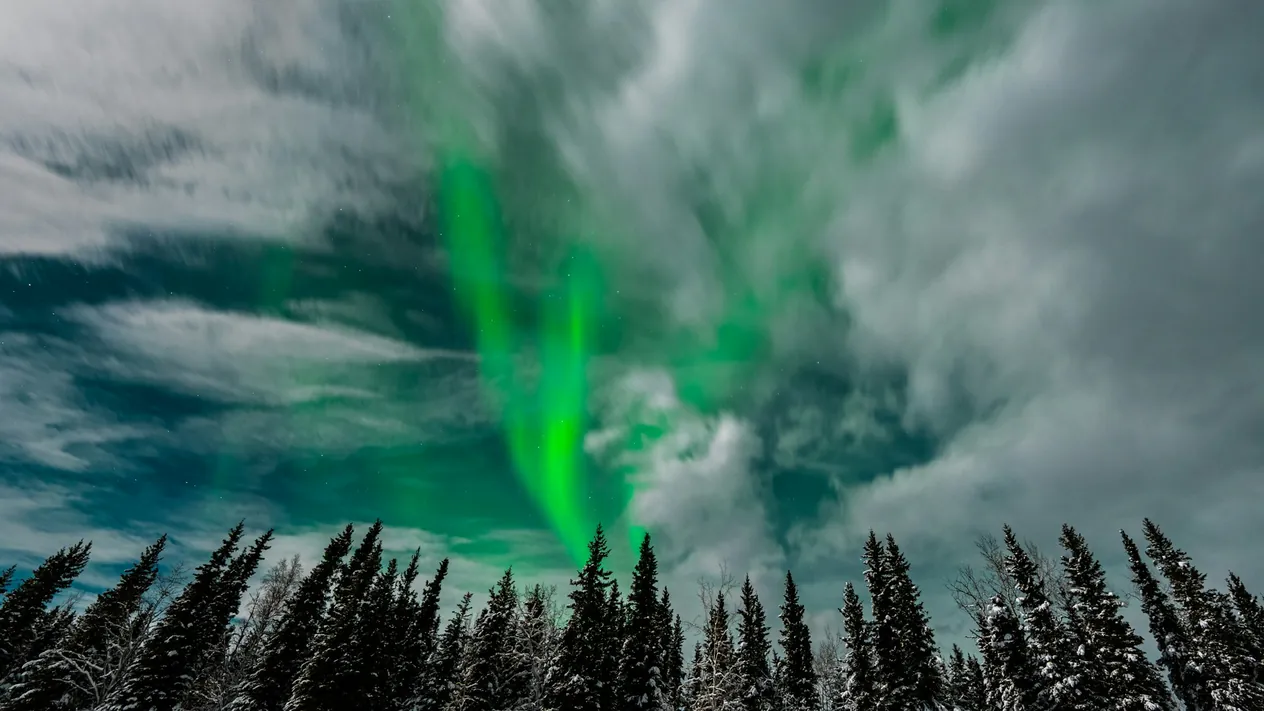
Alaska shares Canada’s geomagnetic advantage and offers a distinctive American flavour to the aurora experience. It’s the most accessible Arctic destination for US-based travellers and combines aurora with some of the most dramatic wilderness on the continent.
Credit: Dennis Zhang
Best locations
Fairbanks sits directly under the aurora oval and is Alaska’s primary aurora destination. Anchorage is further south but sees aurora during stronger storms, and Healy, near Denali National Park, offers dark skies with mountain backdrops.
Strengths
- Fairbanks sits at 64°N directly under the aurora oval
- Cold, dry interior climate means clear skies are common
- Chena Hot Springs combines geothermal bathing with aurora viewing
- Proximity to Denali National Park for daytime activities
- No passport required for US citizens
- Well-developed tourism infrastructure in Fairbanks
- Excellent aurora research community at the University of Alaska
Weaknesses
- Limited direct international flights. Most visitors connect via Seattle or Anchorage
- Very cold in midwinter, comparable to Yellowknife
- Fewer cultural experiences than Scandinavia
- Fairbanks itself is a small, utilitarian city rather than a charming Arctic town
Best for
US-based travellers who want to see the aurora without leaving the country. Fairbanks delivers reliably, and combining it with Denali or Chena Hot Springs makes for an excellent trip. Also a good choice for anyone who wants aurora in a rugged, frontier-style setting.
Svalbard
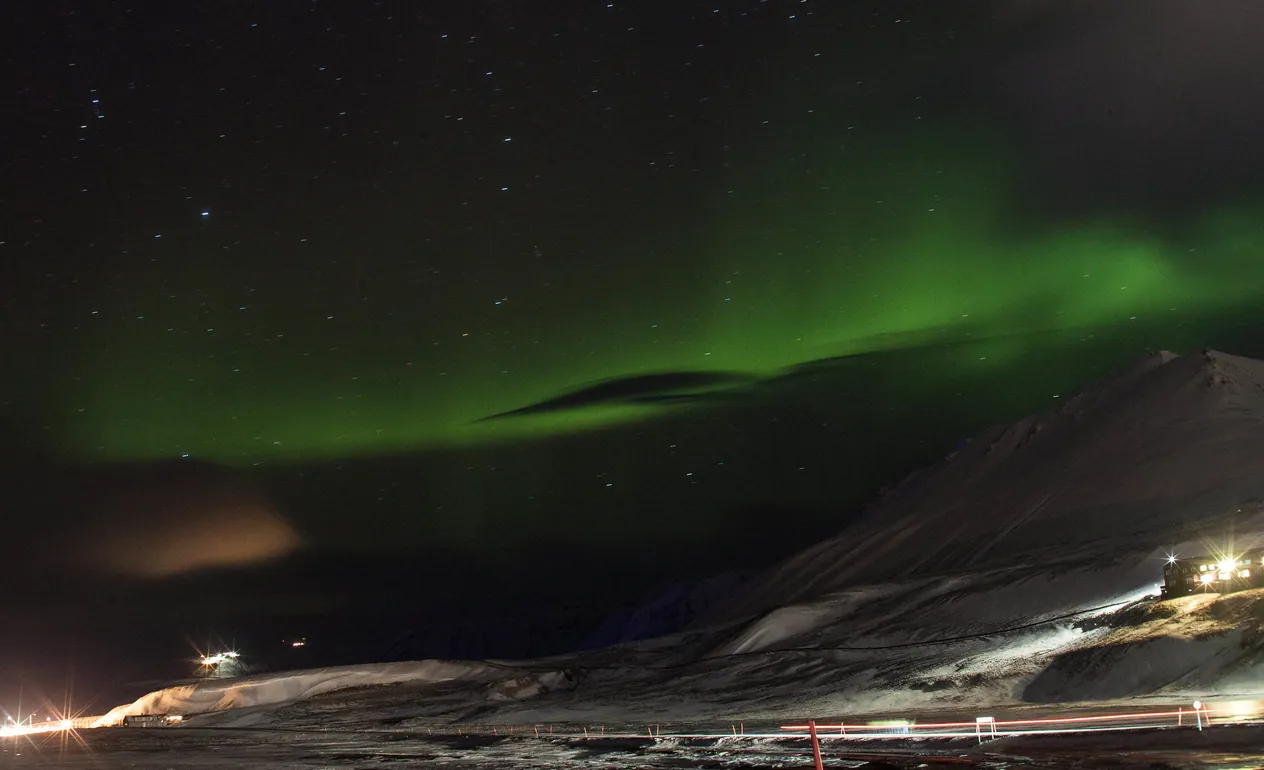
Svalbard is in a category of its own. Longyearbyen on this Norwegian archipelago at 78°N is the northernmost permanently inhabited settlement in the world. It offers a uniquely extreme Arctic experience, but aurora viewing here comes with important caveats.
Credit: Martyn Smith
Strengths
- Total polar darkness from November to February provides round-the-clock viewing potential
- Extraordinary Arctic wilderness with glaciers, fjords and polar bears
- Unique daytime activities including snowmobile expeditions, ice cave visits and Arctic wildlife
- Fascinating Cold War history. Pyramiden, an abandoned Soviet mining town, and Barentsburg, a still-inhabited Russian settlement, offer a glimpse into an unusual chapter of Arctic life. Boat and snowmobile excursions to both are available from Longyearbyen
- A genuine sense of being at the edge of the world
Weaknesses
- At 78°N, Svalbard is actually north of the aurora oval during quiet conditions. The aurora appears to the south, not overhead
- During strong storms, the oval expands to cover Svalbard, but this requires elevated geomagnetic activity
- You cannot leave Longyearbyen without a guide carrying a rifle due to polar bears
- Expensive and remote, with limited flights (via Oslo or Tromsø)
- Extreme cold and polar night are not for everyone
- Visiting Barentsburg and Pyramiden raises ethical questions. Both settlements are owned by the Russian state mining company Trust Arktikugol. Barentsburg is still inhabited and tourist spending there directly supports a Russian state enterprise. Pyramiden is abandoned and tours are run by Norwegian companies, but harbour fees and tourist taxes still go to Trust Arktikugol. Since Russia’s full-scale invasion of Ukraine in 2022, some travellers and tour operators have chosen to avoid both sites for this reason. It is worth considering your own position on this before booking
Best for
Experienced Arctic travellers who want the most extreme and remote aurora destination available. Svalbard is not the optimal choice if aurora is your sole objective, but as an overall Arctic adventure it is unmatched.
Greenland
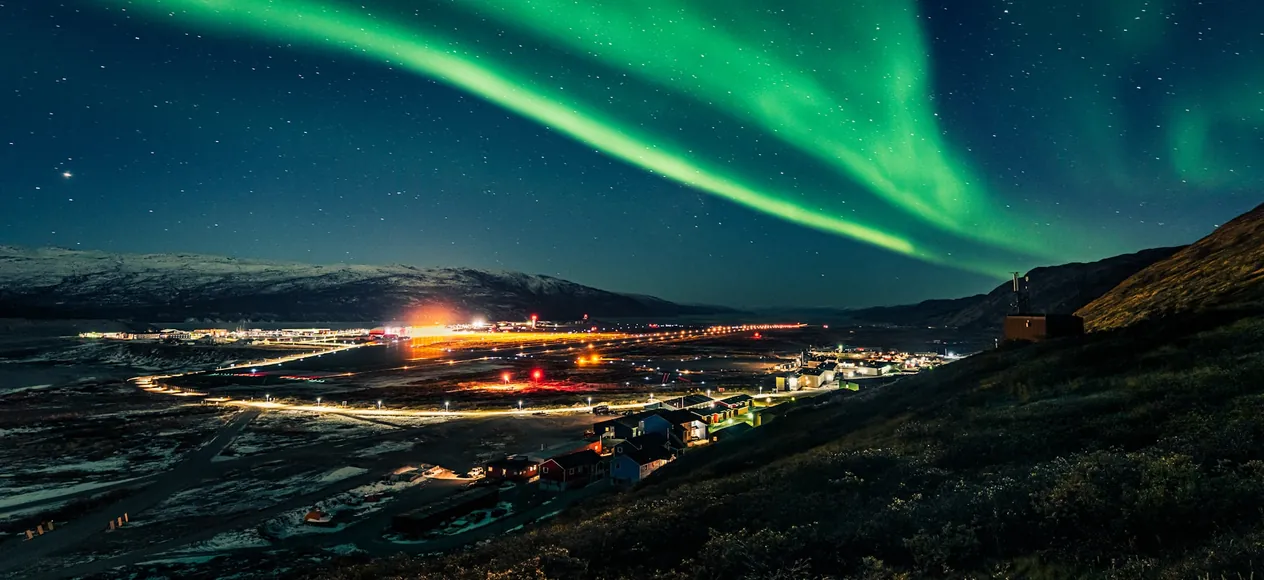
Greenland is the least visited of the major aurora destinations, and one of the most rewarding. Vast, sparsely populated and largely untouched, it offers aurora in a setting of genuine wilderness that few other places can match.
Credit: Mads Schmidt Rasmussen
Best locations
Kangerlussuaq is often cited as having some of the clearest skies in the Arctic, with over 300 clear nights per year thanks to its inland position. Nuuk, the capital, is more accessible but cloudier. Ilulissat, home to the famous Icefjord (a UNESCO World Heritage Site), offers aurora over icebergs. Qaqortoq in the south is Greenland’s most charming town.
Strengths
- Kangerlussuaq has some of the clearest skies of any aurora destination
- Minimal light pollution across the entire country
- Unparalleled landscapes of icebergs, glaciers and tundra
- Rich Inuit culture and history
- Very few tourists compared to Scandinavia
Weaknesses
- Difficult and expensive to reach. Flights from Denmark or Iceland only, with limited schedules
- Tourism infrastructure is basic in most towns
- Very limited accommodation options, especially outside Nuuk and Ilulissat
- Internal travel between towns is by air or boat only (no roads between settlements)
- Extremely cold, particularly inland
Best for
Adventurous travellers who want an aurora experience far from the crowds. Greenland suits people who are comfortable with basic accommodation, flexible plans and a genuine sense of remoteness. The landscapes are unlike anywhere else on this list.
Faroe Islands and Shetland
Neither the Faroe Islands (62°N) nor Shetland (60°N) are traditional aurora destinations, but both see the Northern Lights regularly during solar maximum years. They are worth considering for travellers who want a shorter, more accessible trip from the UK or northern Europe.
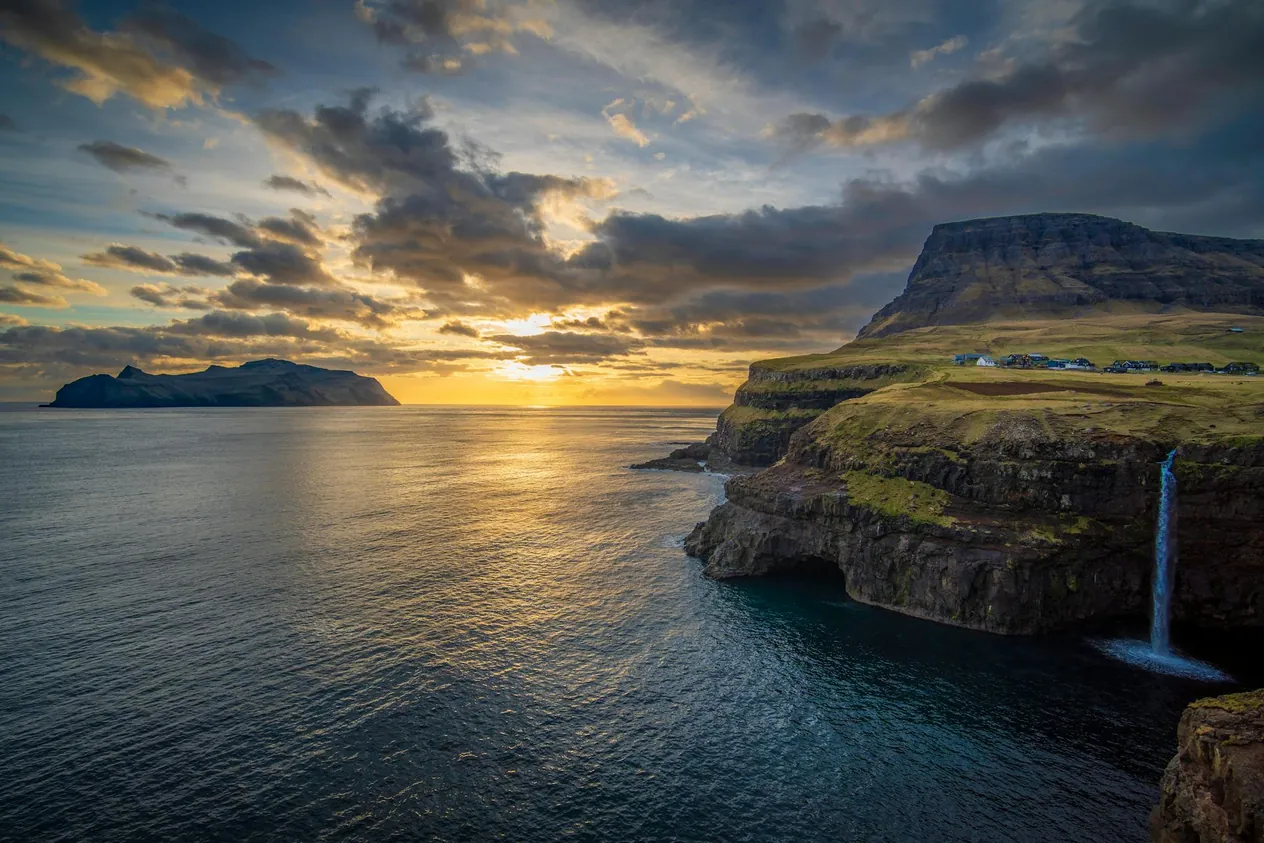
Credit: Raul Koženevski
Strengths
- Much closer to the UK and northern Europe than other aurora destinations
- Beautiful, windswept landscapes with strong cultural identities
- More affordable than Scandinavia
- Aurora visible at Kp 4-5, which occurs frequently during solar maximum
Weaknesses
- At 60-62°N, both sit at the southern margin of the aurora oval. Displays tend to be lower on the horizon than at higher latitudes
- Atlantic weather brings frequent cloud and wind
- Not comparable to dedicated aurora destinations for frequency or intensity of displays
Best for
UK and European travellers who want to combine a chance of seeing the aurora with a short break. Neither is a reliable aurora destination in the way that Tromsø or Fairbanks is, but during solar maximum both offer a realistic possibility, and the islands are rewarding to visit regardless of whether the lights appear.
At A Glance
| Country | Clear skies | Cost | Activities | Access |
|---|---|---|---|---|
| Norway | Moderate | High | Excellent | Good |
| Iceland | Moderate | High | Excellent | Excellent |
| Finland | Good | Moderate | Good | Moderate |
| Sweden | Very good | Moderate | Moderate | Moderate |
| Canada | Very good | Moderate | Good | Moderate |
| Alaska | Good | Moderate | Good | Moderate |
| Svalbard | Moderate | Very high | Unique | Limited |
| Greenland | Very good | High | Limited | Limited |
So Which Should You Choose?
There is no single best country for the Northern Lights. The right choice depends on your priorities:
- Best statistical chance of clear skies: Abisko (Sweden), Yellowknife (Canada) or Kangerlussuaq (Greenland)
- Best overall trip experience: Norway or Iceland, where daytime activities and cultural attractions rival the aurora itself
- Best for comfort: Finland, with its glass igloos, aurora cabins and saunas
- Best for budget: Finland or Sweden from Europe; Canada or Alaska from North America
- Best for families: Finland (Santa Claus Village, husky safaris, family-friendly lodges)
- Best for adventure: Svalbard or Greenland, for a genuinely extreme Arctic experience
- Best for photography: Norway (Lofoten fjords) or Iceland (volcanic landscapes)
- Best for a short trip from the UK: Tromsø (3-hour flight) or the Faroe Islands/Shetland for a lower-budget option
Wherever you go, the core advice is the same: stay at least 3-4 nights to account for weather, be flexible with your plans, learn to read the forecast and don’t forget to enjoy the destination even if the sky doesn’t cooperate. The Arctic in winter is extraordinary with or without the lights.
For detailed information on specific locations within each country, browse our destination guides. For help with timing, see our best time of year guide, and for practical preparation, read our planning guide.