You’ve planned for months. You’ve flown to the Arctic. You’re wrapped in four layers and standing in the dark at minus fifteen. And the sky is stubbornly, infuriatingly blank. Or worse, it’s thick with cloud and there’s nothing to see at all.
This is the reality of aurora chasing. Even in the best locations during peak season, a single night gives you roughly a 30-50% chance of seeing the lights. Cloud cover, quiet solar activity or simply bad timing can leave you staring at darkness. It happens to everyone, including seasoned chasers who have made the trip dozens of times.
But a trip to the Arctic without aurora is still a trip to the Arctic. These are some of the most extraordinary places on Earth, and there is no shortage of things to see, do and experience while you wait for the sky to perform.
First: Don’t Give Up Too Early
Before you resign yourself to an aurora-free trip, make sure you’ve genuinely exhausted your chances. The lights are unpredictable, and conditions can change dramatically within hours.
- Check the forecast repeatedly. Solar wind conditions can shift at any time. A quiet evening can turn active after midnight. Use our live forecast page or apps like SpaceWeatherLive and My Aurora Forecast to monitor Bz and solar wind speed through the night. See our guide to reading aurora forecasts for what to look for.
- Stay up late. The best aurora often appears between 10pm and 2am local time, around magnetic midnight. If you’ve been checking at 9pm and going to bed at 10, you may be missing the window entirely.
- Drive to escape cloud. If your location is overcast, check satellite cloud cover maps. Sometimes driving 30-60 minutes inland or to a different valley is enough to find a gap. Ask your hotel or local guides for advice on where skies tend to clear.
- Use your camera. Your eyes need a strong display to see green, but a phone camera in night mode can detect faint aurora that is invisible to the naked eye. Point it north and take a 3-5 second exposure. If you see colour in the image that you can’t see with your eyes, the aurora is there, just faint. It may intensify later.
- Ask locally. Hotel staff, tour guides and locals often have a feel for when conditions are likely to improve. Many hotels and lodges in aurora destinations offer wake-up calls when the lights appear overnight.
If The Weather Is The Problem
Cloud is the aurora chaser’s greatest enemy. The lights could be blazing overhead and you’d never know. If you’re stuck under persistent overcast skies, you have a few options.
- Move to a drier location. Coastal areas like Tromsø and Reykjavík tend to get more cloud than inland locations. If you’re flexible, consider a day trip or overnight to somewhere in a rain shadow. Abisko in Sweden is famous for its microclimate that keeps skies clear when the Norwegian coast is overcast. Inari in Finland also benefits from more continental weather.
- Book a guided aurora chase. Local tour operators monitor weather and forecasts constantly. They know the terrain and will drive you to wherever the skies are clearest, sometimes covering hundreds of kilometres in a night. This is often your best option when conditions are marginal. Check the excursions we list for your destination.
- Wait it out. Arctic weather is volatile. A sky that’s been overcast all day can clear suddenly after midnight. If you have multiple nights, patience is your strongest tool.
Making The Most Of Your Nights
Even without aurora, the Arctic night sky has plenty to offer.
Stargazing
The same dark skies and remote locations that make aurora viewing possible also make for exceptional stargazing. Far from light pollution, the Milky Way is visible in stunning detail. In winter, constellations like Orion, Cassiopeia and the Plough are prominent, and you may spot satellites, shooting stars or even the faint glow of the zodiacal light. If you have binoculars or a small telescope, deep-sky objects like the Andromeda galaxy and the Pleiades cluster are easily visible.
Moonlit Landscapes
A bright moon is bad news for aurora but wonderful for everything else. Moonlight reflecting off snow creates an ethereal, blue-white landscape that is breathtaking in person and spectacular in photographs. Some of the most memorable Arctic experiences happen under a full moon, with mountains and fjords illuminated as if by daylight.
Night Photography
Practise your night photography skills even without aurora. Star trails, moonlit landscapes, light-painted foregrounds and long exposures of the winter sky are all rewarding subjects. If the aurora does appear later in your trip, you’ll already have your camera settings dialled in and compositions scouted. See our photography guide for camera settings and tips.
Daytime Activities By Region
The best aurora destinations are also home to some of the world’s most extraordinary daytime experiences. Filling your days with activities means that even if the lights don’t cooperate at night, you’ll come home with unforgettable memories.
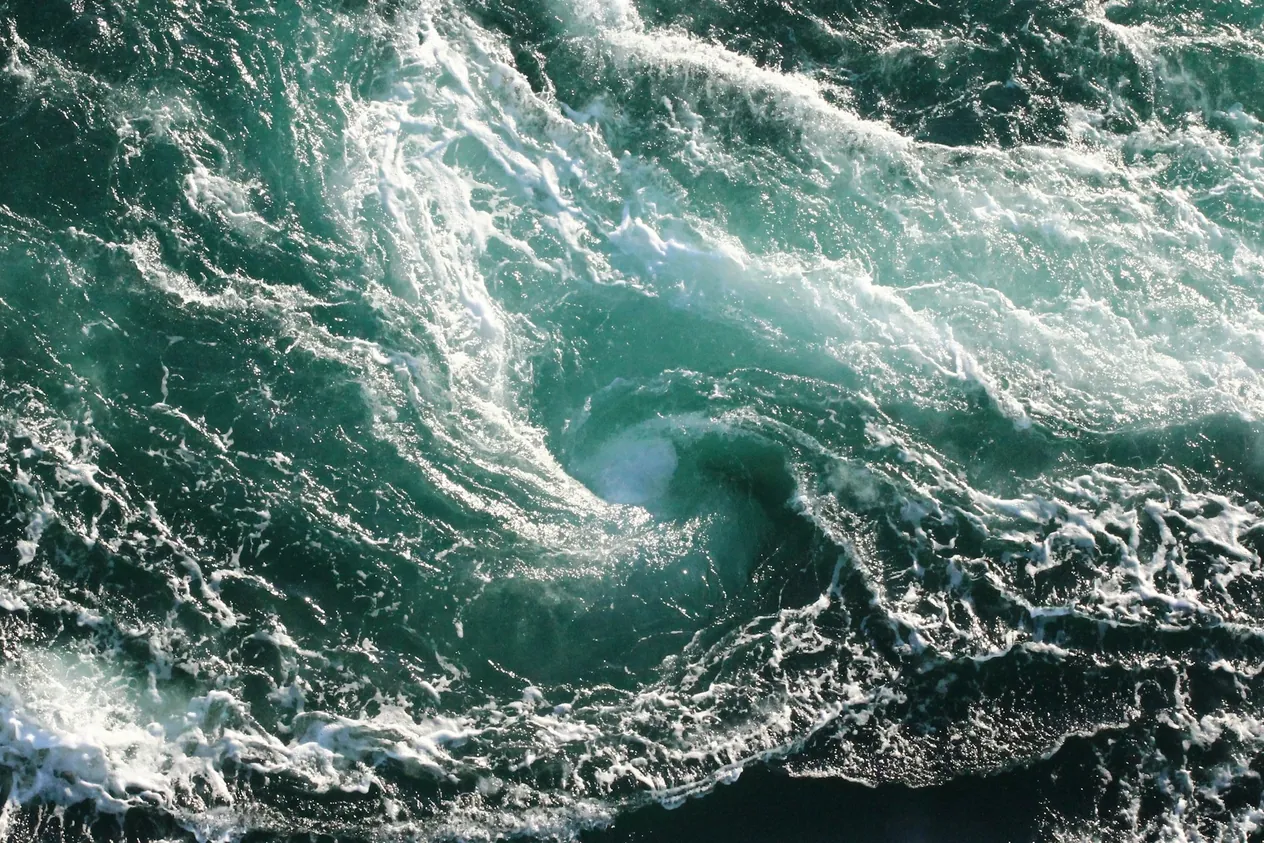
Credit: Arvid Høidahl
Norway
- Dog sledding. Available across northern Norway, this is one of the most popular Arctic activities. Guided tours from Tromsø, Alta and the Lofoten Islands range from short introductory runs to full-day wilderness expeditions.
- Whale watching. From October to January, humpback and orca whales feed in the fjords around Tromsø and the Lofoten Islands. Boat trips run daily and sightings are common.
- The Northern Lights Cathedral. Alta’s striking cathedral, with its spiralling roof inspired by the aurora, is worth a visit in its own right.
- Snowmobiling and reindeer sledding. Both are widely available across northern Norway and offer a different way to experience the Arctic landscape.
- Saltstraumen. (pictured above) Experience the spectacular natural phenomenon of the world’s strongest maelstrom, created when the tide turns and flows in and out of the channel between Saltenfjorden and Skjerstadfjorden, just outside Bodø.
Iceland
- The Golden Circle. Þingvellir National Park (a UNESCO World Heritage Site), the Geysir geothermal area and Gullfoss waterfall are all within easy reach of Reykjavík.
- Geothermal bathing. Iceland’s hot springs and geothermal pools are the perfect antidote to a cold, aurora-less night. The Blue Lagoon is the most famous, but quieter alternatives like the Sky Lagoon, Mývatn Nature Baths and countless hidden hot pots across the country offer a more authentic experience.
- Ice caves and glaciers. Guided tours into the ice caves beneath Vatnajökull glacier run from November to March. The blue ice formations are extraordinary and make for incredible photographs.
- Snorkelling Silfra. The Silfra fissure in Þingvellir offers snorkelling between the North American and Eurasian tectonic plates in water so clear you can see over 100 metres. Dry suits keep you warm.
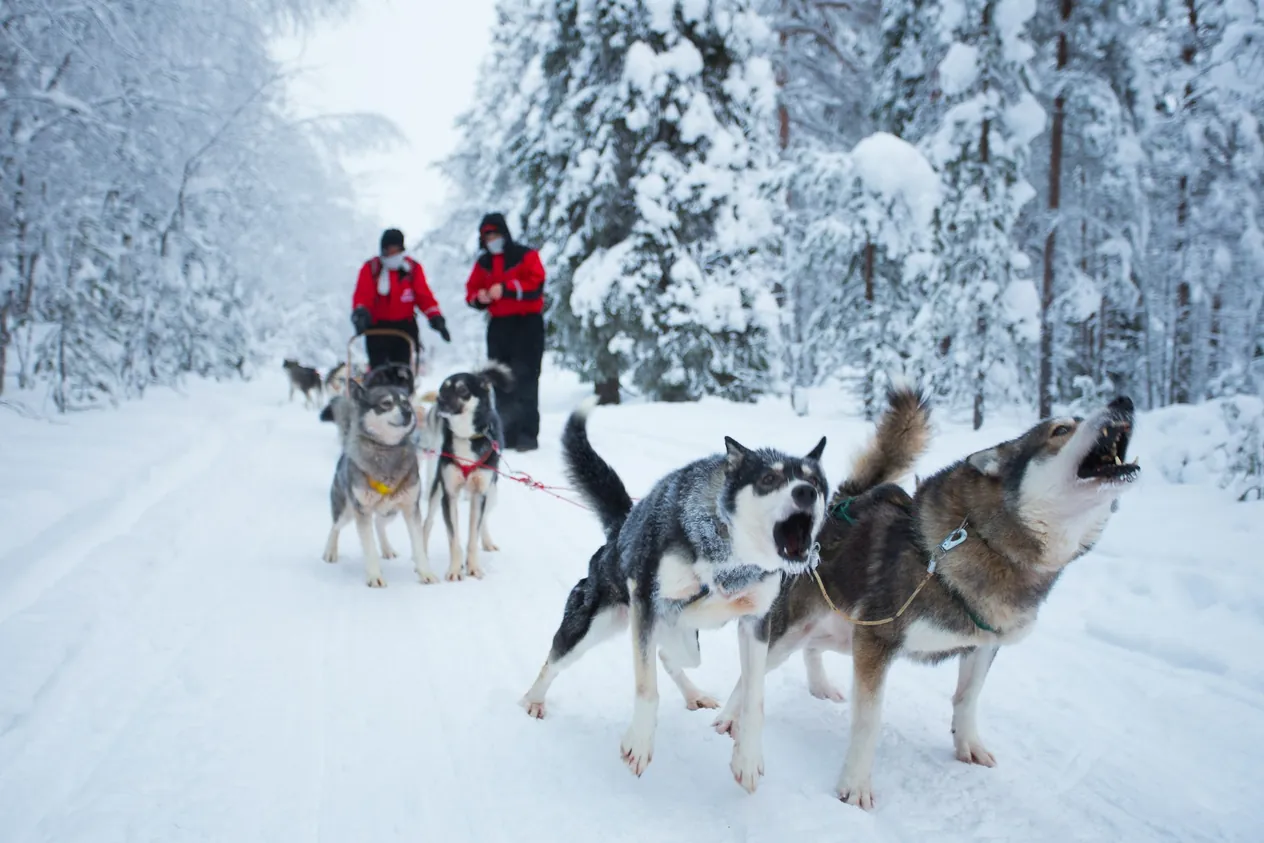
Credit: Robert Tjalondo
Finland
- Husky safaris. Finnish Lapland is one of the best places in the world for dog sledding, with multi-day expeditions available from Rovaniemi, Levi and Luosto.
- Ice fishing. A quintessential Finnish experience. Drill a hole, drop a line and wait in profound silence on a frozen lake.
- Saunas. Finland has more saunas than cars. A traditional wood-fired sauna followed by a roll in the snow (or a plunge into an ice hole) is something you won’t forget in a hurry.
- Santa Claus Village. If you’re in Rovaniemi, the Arctic Circle crossing and Santa Claus Village are popular stops, especially for families.
Sweden
- The ICEHOTEL. In Jukkasjärvi, near Kiruna, the ICEHOTEL is rebuilt from Torne River ice every winter. Even if you don’t stay overnight, visiting the art suites and ice bar is a memorable experience.
- Cross-country skiing. The Swedish Arctic offers vast, empty landscapes perfect for Nordic skiing. Trails around Abisko and Björkliden are well maintained and remarkably peaceful.
- Sámi culture. Visit a Sámi community to learn about reindeer herding, traditional crafts and the indigenous culture of Arctic Scandinavia.
Alaska and Canada
- Hot springs. Chena Hot Springs near Fairbanks combines geothermal bathing with aurora viewing. Even on cloudy nights, soaking in naturally heated water at minus thirty is an experience in itself.
- Wildlife. Moose, caribou, foxes and eagles are common across the Alaskan and Canadian Arctic. Churchill in Manitoba is the polar bear capital of the world, with guided tundra buggy tours running from October to November.
- Snowshoeing and fat biking. Both offer ways to explore the winter landscape at your own pace. Trails are available near most Arctic towns.
- Indigenous culture. Museums and cultural centres in Yellowknife, Whitehorse and Churchill offer insights into First Nations and Inuit traditions and their relationship with the land and sky.
The Statistics Are On Your Side
If you’re feeling disheartened after one or two blank nights, remember the numbers. A single clear night in peak season gives you roughly a one-in-two chance. Over three clear nights, your odds rise to around 80-90%. Over five nights, you’re looking at near certainty during periods of elevated solar activity.
The key word is clear. If cloud has been the problem, your statistical clock hasn’t really started. One clear night with active conditions can make up for four cloudy ones. This is why we recommend staying at least 3-4 nights, and ideally a full week, to give yourself the best chance.
If You Truly Miss Out
Sometimes, despite your best efforts, the aurora simply doesn’t appear. It happens. The Sun was quiet, the cloud didn’t break, the timing wasn’t right. It’s disappointing, but it doesn’t diminish what you’ve experienced.
You’ve stood in some of the most remote and beautiful places on Earth. You’ve breathed air so cold it stung your lungs. You’ve seen landscapes that most people only know from photographs. You’ve eaten reindeer stew, soaked in hot springs, been pulled across frozen lakes by huskies. These are not consolation prizes. They are the reason people fall in love with the Arctic and come back again and again.
And when you do come back, you’ll know the terrain, you’ll understand the forecasts, you’ll have your favourite viewing spots scouted and your camera settings saved. You’ll be ready. The aurora will be there. It’s always there. You just need the sky to cooperate.
For help planning your next attempt, see our planning guide, our best time of year guide, or browse our destination guides for inspiration.