Most aurora chasers head north, but the lights dance at the bottom of the world too. The Aurora Australis, or Southern Lights, is the southern twin of the Aurora Borealis, the very same phenomenon mirrored across the other hemisphere. It is harder to reach and less talked about, which is exactly what makes seeing it so special.
If you have read our science of the aurora guide you will know that the lights are caused by charged particles from the Sun striking gases in the upper atmosphere. This happens around both magnetic poles at once, so whenever the north has a good display, the south usually does too. The difference is not the aurora itself but the geography beneath it.
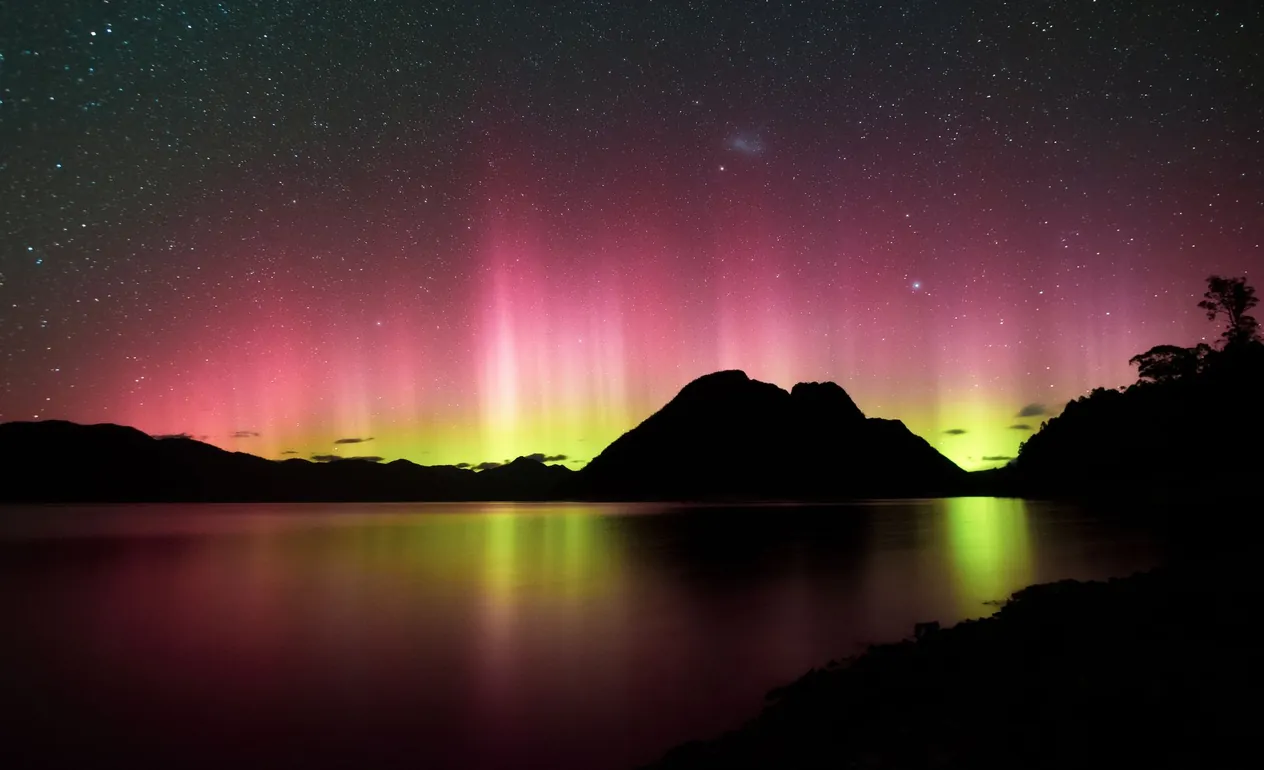
Credit: Tristan Pokornyi
Why the Southern Lights are harder to see
The northern auroral oval passes over plenty of accessible, inhabited land: northern Norway, Iceland, Finland, Sweden, Canada and Alaska. The southern oval, by contrast, sits mostly over open ocean and the empty ice of Antarctica. There is very little populated land at the right latitude, which is why the Southern Lights have a reputation for being elusive. You often need either a strong geomagnetic storm to push the display further north than usual, or a trip to the far south of a handful of countries.
The science, the colours and the seasons are otherwise the same as in the north. The best displays still come during periods of high solar activity and around the equinoxes, and you still need dark, clear skies away from city lights.
When to see the Aurora Australis
Because the seasons are flipped in the southern hemisphere, the aurora season runs opposite to the north. The long, dark nights that give you the best chance fall between roughly March and September, peaking around the southern winter. The equinox months of March and September tend to produce the strongest activity, just as they do up north. In the depths of the southern summer (December and January) the nights are simply too short and bright at these latitudes to see much at all.
For more on how solar activity shapes your chances throughout the year, see our guide to the best time of year to see the aurora. The same principles apply, just with the calendar turned around.
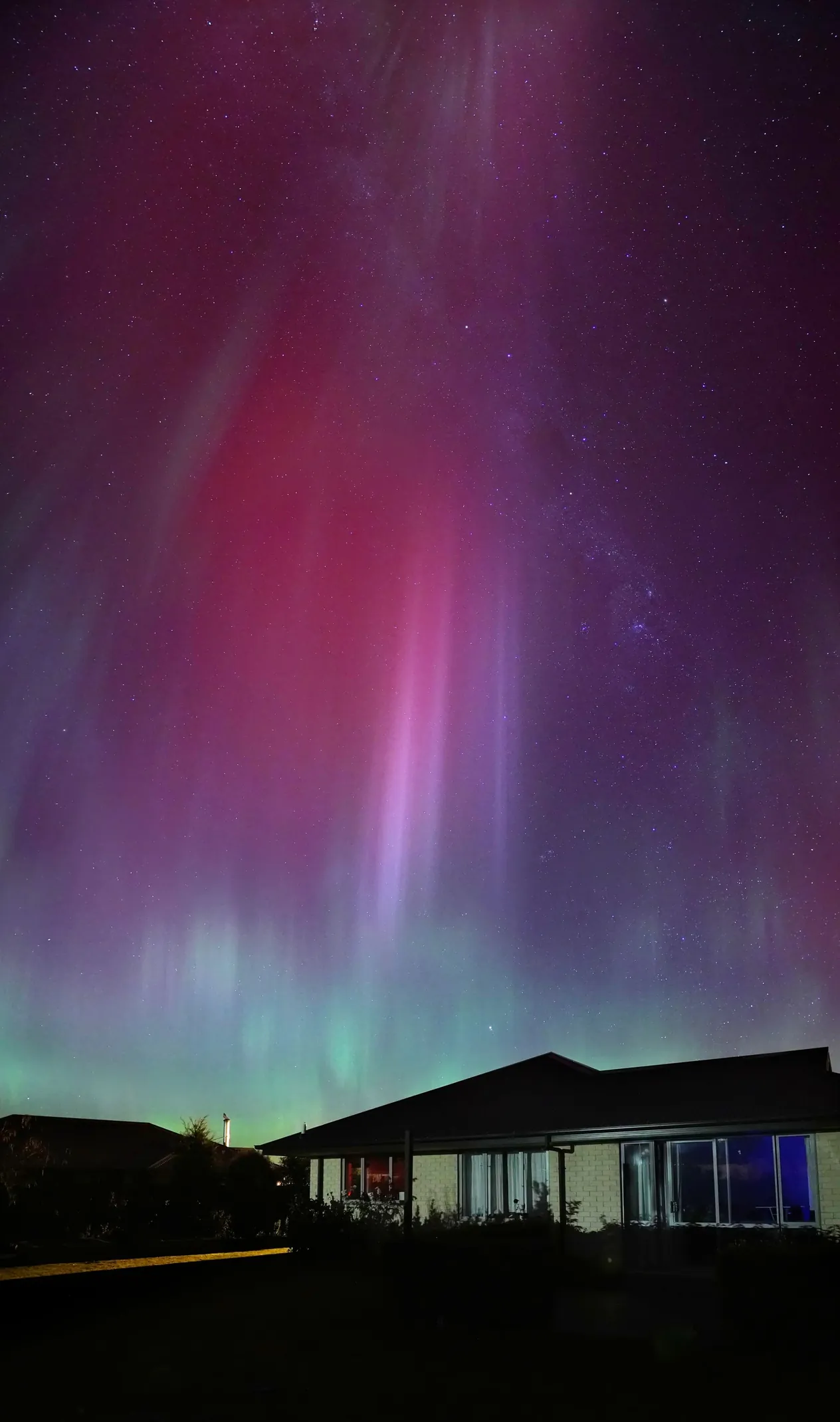
Credit: Joshua Hurricks
Where to see the Southern Lights
Tasmania, Australia
Tasmania is the most accessible place on Earth to chase the Aurora Australis. Sitting around 42°S, the island regularly catches displays on its southern horizon, and during strong storms the lights can fill the sky. Head to dark, south-facing spots away from Hobart, such as the shores of South Arm, Cockle Creek at the island's southern tip, or the highlands. A dedicated local community tracks and shares alerts, so it pays to join an aurora forecasting group before you travel.
South Island, New Zealand
The far south of New Zealand's South Island offers another realistic shot. The area around Dunedin, the Catlins, Invercargill and Stewart Island looks out over the Southern Ocean with little between you and Antarctica. Stewart Island, whose Māori name Rakiura means "glowing skies", is a designated Dark Sky Sanctuary and one of the best vantage points in the country.
Antarctica and the Southern Ocean
For the purest displays you have to go to the source. Antarctic research stations sit directly beneath the southern auroral oval, and expedition cruises and flights to the deep south can put you right under the lights. This is the most expensive and committing option by far, but also the most reliable for anyone determined to see the aurora overhead rather than on the horizon.
Southern Chile, Argentina and the Falklands
Patagonia and Tierra del Fuego at the southern tip of South America, along with the Falkland Islands, reach far enough south to catch the aurora during stronger events. These are less established as aurora destinations, but their remoteness means wonderfully dark skies for those who make the journey.
Northern or Southern Lights?
If your main goal is simply to see the aurora overhead, reliably and without a major expedition, the north still wins on accessibility. The Southern Lights reward the more adventurous traveller, or anyone already heading to Australia, New Zealand or South America who wants to add a once-in-a-lifetime sight to the trip. Compare your northern options in our Northern Lights by country guide.
How to improve your chances
The tactics are identical to hunting the Northern Lights. Get well away from light pollution, find a clear view of the southern horizon, check the forecast and the Kp-index, and be patient. Wrap up warm, as the southern winter nights are cold, and give your eyes 15 to 20 minutes to adjust to the dark. A camera will capture colour and detail that the naked eye cannot, so bring one even on quieter nights.
Frequently Asked Questions
- Are the Southern Lights the same as the Northern Lights?
- Yes. The Aurora Australis and Aurora Borealis are the same phenomenon, caused by charged particles from the Sun striking the upper atmosphere near the magnetic poles. They occur around both poles at the same time, so a strong display in the north usually means a strong display in the south too. The only real difference is how much accessible land sits beneath each auroral oval.
- When is the best time to see the Aurora Australis?
- Because the southern seasons are reversed, the aurora season runs from around March to September, peaking in the southern winter. The equinox months of March and September tend to bring the strongest activity. The southern summer nights are too short and bright to see much.
- Where is the easiest place to see the Southern Lights?
- Tasmania in Australia is widely considered the most accessible place to see the Aurora Australis, thanks to its far southern latitude and dark, south-facing coastlines. The far south of New Zealand's South Island, including Stewart Island, is another strong option.
- Why are the Southern Lights seen less often than the Northern Lights?
- It is not that they happen less often, but that far fewer people live beneath the southern auroral oval. Most of it lies over open ocean and Antarctica, so there is little accessible land at the right latitude. The north, by contrast, has many populated regions directly under the lights.